Can Stress Really Cause Heart Problems? The Truth About Stress and Heart Health…!!
Modern life is filled with deadlines, financial worries, family responsibilities, and unexpected challenges. As a result, millions of people experience stress every day. While occasional stress is a normal part of life, chronic stress can have serious consequences for your overall health. More importantly, it can significantly affect your heart.
Many people ask, “Can stress really cause heart problems?”
The answer is yes.
Although stress does not always directly cause heart disease, it can trigger several conditions that increase the risk of heart attacks, high blood pressure, irregular heart rhythms, and stroke. Therefore, understanding the relationship between stress and heart health is essential for preventing cardiovascular disease.
If you are already living with diabetes, you may also find our guide on
Heart Health in Diabetes: Double Risk, Double Care
helpful because diabetes and chronic stress often increase cardiovascular risk together.
What Is Stress?
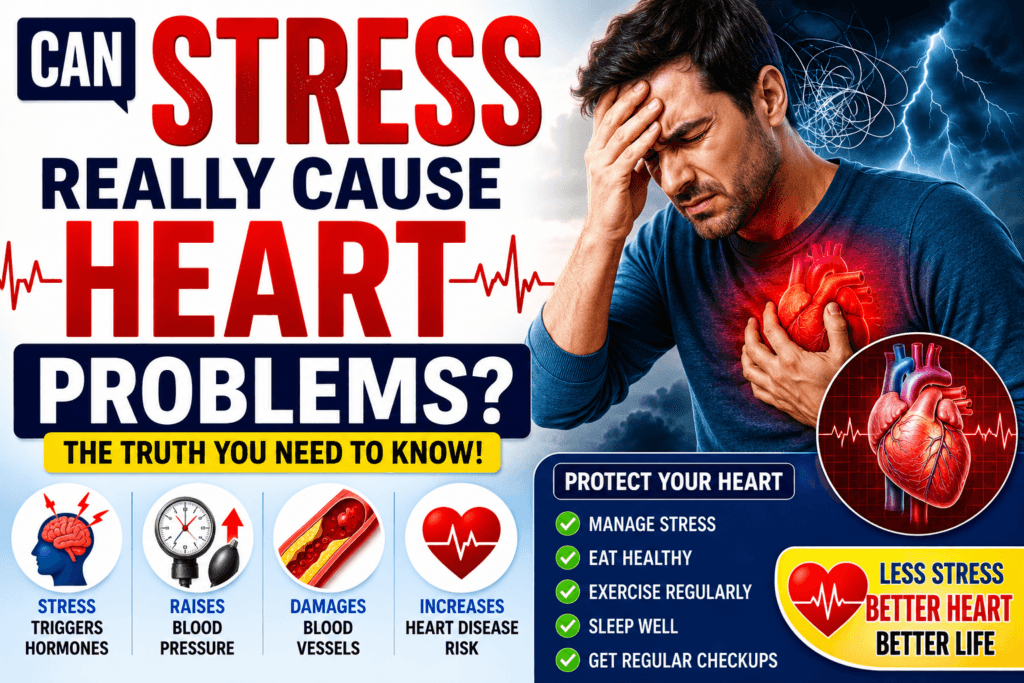
Stress is the body’s natural response to physical or emotional challenges. Whenever you face danger or pressure, your brain releases stress hormones such as adrenaline and cortisol. Consequently, your heart beats faster, blood pressure rises, and your body prepares for a “fight or flight” response.
Although this reaction is helpful during emergencies, constant stress keeps your body in a prolonged state of alert. Eventually, this continuous strain can damage your cardiovascular system.
Long-term stress affects not only your mind but also your blood vessels, blood pressure, cholesterol levels, and heart rhythm.
How Does Stress Affect the Heart?
The relationship between stress and heart health is complex. However, researchers agree that chronic stress contributes to several risk factors for cardiovascular disease.
| Effect of Stress | Impact on the Heart |
|---|---|
| High blood pressure | Increases workload on the heart. |
| Rapid heartbeat | Raises oxygen demand by the heart muscle. |
| Increased cortisol | Promotes weight gain and diabetes. |
| Inflammation | Accelerates plaque formation in arteries. |
| Poor sleep | Raises cardiovascular risk. |
| Unhealthy lifestyle | Encourages smoking, overeating, and physical inactivity. |
Therefore, stress often damages the heart both directly and indirectly.
Can Stress Cause a Heart Attack?
Yes, severe emotional or physical stress can trigger a heart attack, especially in people who already have narrowed coronary arteries. During stressful situations, blood pressure and heart rate rise suddenly. Consequently, the heart requires more oxygen. If blood flow cannot meet this demand, chest pain or even a heart attack may occur.
Furthermore, intense emotional stress may trigger a rare condition called Takotsubo Cardiomyopathy, also known as “Broken Heart Syndrome.” Although it usually improves with treatment, it can resemble a heart attack and requires immediate medical attention.
Warning Signs You Should Never Ignore
If stress is accompanied by any of the following symptoms, seek emergency medical care immediately:
- Chest pain or pressure
- Shortness of breath
- Pain spreading to the arm, neck, jaw, or back
- Sudden sweating
- Dizziness or fainting
- Irregular heartbeat
- Extreme fatigue
- Nausea with chest discomfort
Additionally, you can learn more by reading our article on
Approach to Patient with Chest Pain.
Who Is Most at Risk?
- People with high blood pressure
- Patients with diabetes
- Individuals with high cholesterol
- Smokers
- People who rarely exercise
- Those with obesity
- Individuals with a family history of heart disease
- People experiencing chronic anxiety or depression
If several of these risk factors are present together, cardiovascular risk becomes significantly higher.
Healthy Ways to Reduce Stress and Protect Your Heart
| Healthy Habit | Benefit for the Heart |
|---|---|
| Regular exercise | Lowers blood pressure and reduces stress hormones. |
| Deep breathing | Calms the nervous system. |
| Meditation or prayer | Improves emotional well-being. |
| 7–9 hours of sleep | Supports heart recovery. |
| Healthy diet | Improves cholesterol and blood sugar. |
| Spending time with family | Reduces emotional stress. |
| Limiting caffeine and alcohol | Helps stabilize heart rhythm. |
Foods That Help Reduce Stress
- Leafy green vegetables
- Walnuts and almonds
- Fatty fish rich in Omega-3
- Whole grains
- Fresh fruits
- Yogurt
- Green tea (in moderation)
- Dark chocolate (small amounts)
Moreover, staying well hydrated and limiting processed foods may further support both mental and cardiovascular health.
Simple Daily Tips for Better Stress and Heart Health
- Walk for at least 30 minutes daily.
- Practice deep breathing for 5–10 minutes.
- Avoid smoking.
- Maintain a healthy weight.
- Monitor your blood pressure regularly.
- Control blood sugar if you have diabetes.
- Spend time outdoors.
- Talk to someone you trust.
- Seek professional help if stress becomes overwhelming.
Frequently Asked Questions (FAQs)
Can stress permanently damage the heart?
Long-term uncontrolled stress can increase the risk of heart disease by contributing to high blood pressure, inflammation, and unhealthy lifestyle habits.
Can anxiety feel like a heart attack?
Yes. Panic attacks may cause chest pain, rapid heartbeat, and shortness of breath. However, because these symptoms are similar to a heart attack, medical evaluation is always recommended.
Does reducing stress lower heart disease risk?
Yes. Managing stress through exercise, healthy eating, adequate sleep, and relaxation techniques improves overall cardiovascular health.
Conclusion
The connection between stress and heart health is supported by growing scientific evidence. Although stress is a normal part of life, chronic stress can quietly increase the risk of heart disease through high blood pressure, inflammation, poor sleep, and unhealthy habits. Fortunately, these risks can be reduced by making positive lifestyle changes and seeking medical advice when needed.
Ultimately, taking care of your emotional health is just as important as taking care of your physical health. By managing stress effectively, staying active, eating a balanced diet, and attending regular health checkups, you can protect your heart and enjoy a healthier future.
Key Takeaway
Stress may begin in the mind, but its effects can reach the heart. The good news is that managing stress through healthy habits, regular exercise, proper sleep, and medical care can significantly reduce your risk of cardiovascular disease.
References
- American Heart Association
- World Health Organization (WHO)
- Heart Health in Diabetes – MedicalsWeb
- Approach to Patient with Chest Pain – MedicalsWeb
- You Can Also visit www.medicalsweb.com for more.