Top 5 Causes of Sudden Heart Failure in Young People
Heart failure is often considered a condition of older adults; however, cases of
heart failure in young individuals have increasingly been reported worldwide.
Although uncommon, sudden heart failure in younger people can lead to devastating consequences
when underlying conditions remain undiagnosed. Therefore, awareness of the major causes is
considered essential for early detection and prevention.
In many cases, symptoms may be mild or completely absent before a serious cardiac event occurs.
As a result, routine medical evaluation and timely diagnosis are strongly recommended,
particularly for individuals with a family history of heart disease.
Key Fact
Many causes of heart failure in young people are inherited or congenital.
Consequently, regular screening can help identify high-risk individuals before complications develop.
What Is Heart Failure?
Heart failure is a condition in which the heart is unable to pump sufficient blood to meet
the body’s needs. As a result, oxygen and nutrients cannot be delivered effectively to organs
and tissues. While heart failure develops gradually in many patients, sudden heart failure can
also occur due to underlying structural or electrical abnormalities.
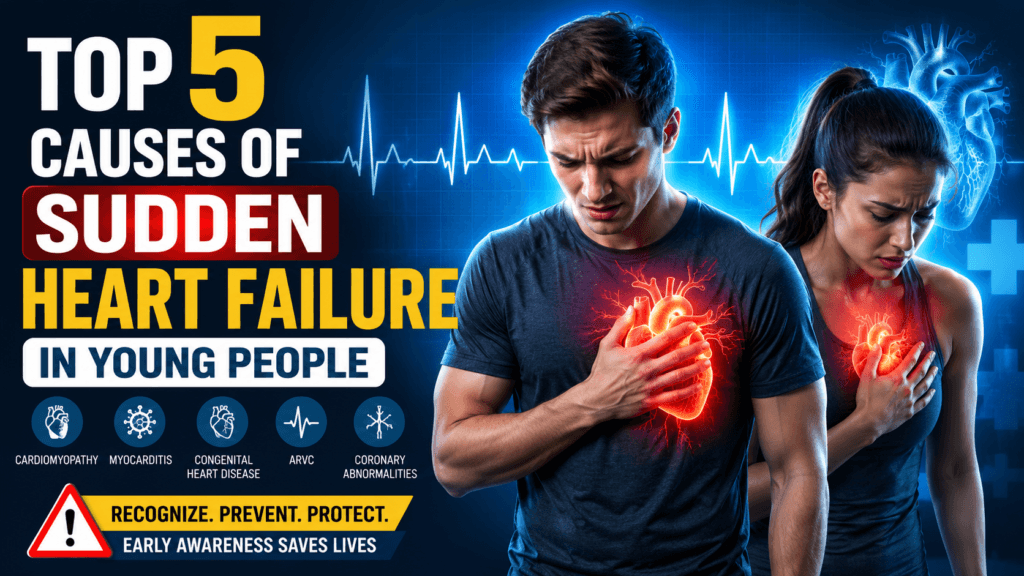
Top 5 Causes of Sudden Heart Failure in Young People
1. Hypertrophic Cardiomyopathy (HCM)
Hypertrophic cardiomyopathy is considered one of the leading causes of sudden cardiac death in
young adults and athletes. In this condition, the heart muscle becomes abnormally thickened.
Consequently, blood flow may be obstructed, and dangerous heart rhythms may develop.
The disease is frequently inherited and may remain undetected for years. Unfortunately,
the first manifestation may sometimes be sudden collapse during physical activity.
Warning Signs:
- Shortness of breath during exercise
- Chest pain
- Dizziness or fainting
- Family history of sudden cardiac death
Therefore, cardiac screening is often recommended for young athletes and individuals with a
positive family history.
2. Myocarditis (Heart Muscle Inflammation)
Myocarditis is characterized by inflammation of the heart muscle. It is commonly caused by viral
infections, although bacterial infections and autoimmune diseases may also be responsible.
When severe inflammation develops, the pumping function of the heart can be significantly impaired.
As a result, sudden heart failure in young individuals may occur.
Furthermore, myocarditis has been associated with life-threatening arrhythmias. Because symptoms
often resemble a simple viral illness, diagnosis may be delayed.
Common Symptoms:
- Fatigue
- Chest discomfort
- Rapid heartbeat
- Shortness of breath
- Flu-like illness before symptoms appear
3. Congenital Heart Disease
Congenital heart disease refers to structural abnormalities of the heart that are present at birth.
Although many defects are diagnosed and treated during childhood, some conditions may remain hidden
until adulthood.
Over time, excessive strain can be placed on the heart. Consequently, heart function may deteriorate,
leading to sudden heart failure or serious rhythm disturbances.
Examples include congenital valve defects, abnormal blood vessel connections, and septal defects.
Therefore, lifelong follow-up is often advised even after corrective surgery has been performed.
4. Arrhythmogenic Right Ventricular Cardiomyopathy (ARVC)
ARVC is a rare inherited heart muscle disorder in which normal heart tissue is gradually replaced
by fatty or fibrous tissue. As a result, the electrical system of the heart becomes disrupted.
Dangerous ventricular arrhythmias may subsequently develop, particularly during exercise.
Unfortunately, sudden cardiac arrest may be the first sign of disease in some patients.
Because the condition is genetic, screening of family members is generally recommended once a case
has been identified.
cardiomyopathies may be present.
5. Coronary Artery Abnormalities and Premature Coronary Disease
Although coronary artery disease is traditionally associated with older age, it is increasingly
being observed in younger populations. Risk factors such as smoking, obesity, diabetes, and
genetic lipid disorders have contributed to this trend.
In addition, congenital abnormalities of the coronary arteries can restrict blood supply to the
heart muscle. Consequently, heart attacks and sudden heart failure may occur even in otherwise
healthy young individuals.
Moreover, the widespread adoption of unhealthy lifestyles has increased cardiovascular risk among
young adults globally.
Risk Factors Associated with Heart Failure in Young
Several factors have been linked with an increased risk of heart failure in young
people. These include:
- Family history of heart disease
- High blood pressure
- Smoking and tobacco use
- Obesity
- Diabetes mellitus
- Substance abuse
- Sedentary lifestyle
- Undiagnosed congenital heart defects
Therefore, preventive healthcare measures should be prioritized from an early age.
When Should Medical Attention Be Sought?
Immediate medical evaluation should be sought if any of the following symptoms are experienced:
- Sudden chest pain
- Unexplained fainting
- Severe shortness of breath
- Palpitations
- Exercise intolerance
- Persistent fatigue
Early diagnosis can significantly improve outcomes. Furthermore, potentially life-saving treatments
can often be initiated before serious complications develop.
Prevention Strategies
Although not all causes can be prevented, risk can be substantially reduced through healthy lifestyle
choices and regular medical screening.
- Maintain a heart-healthy diet
- Exercise regularly
- Avoid smoking and substance abuse
- Control blood pressure and diabetes
- Attend regular cardiac check-ups
- Seek evaluation for family history of sudden cardiac death
Conclusion
Sudden heart failure in young people remains a serious but often preventable health
concern. Hypertrophic cardiomyopathy, myocarditis, congenital heart disease, arrhythmogenic right
ventricular cardiomyopathy, and coronary artery abnormalities represent the most common causes.
Therefore, awareness, early screening, and timely medical intervention are considered crucial for
reducing the risk of sudden cardiac events. By recognizing warning signs and adopting healthy habits,
many young lives can potentially be protected from preventable heart complications.
For more information about heart disease prevention, visit the American Heart Association.https://www.heart.org