Normal Blood Pressure by Age , Simple Chart Explained
Blood pressure is considered one of the most important indicators of heart health. It is measured every day in hospitals, clinics, and even at home. However, many people often ask, “What is the normal blood pressure by age?” The answer is not always as simple as expected because blood pressure may vary slightly with age, lifestyle, and medical conditions.
In this complete guide, the focus keyword normal blood pressure is explained in simple language. Moreover, an easy chart is provided so that readers can quickly understand whether their readings are within a healthy range. Furthermore, useful tips are shared to help maintain healthy blood pressure naturally.
What Is Blood Pressure?
Blood pressure is the force that is exerted by circulating blood against the walls of the arteries. It is recorded as two numbers:
- Systolic Pressure: The upper number, measured when the heart contracts.
- Diastolic Pressure: The lower number, measured when the heart relaxes between beats.
For example, a blood pressure reading of 120/80 mmHg means:
- 120 = Systolic Blood Pressure
- 80 = Diastolic Blood Pressure
Simple Normal Blood Pressure Chart by Age
| Age Group | Normal Blood Pressure |
|---|---|
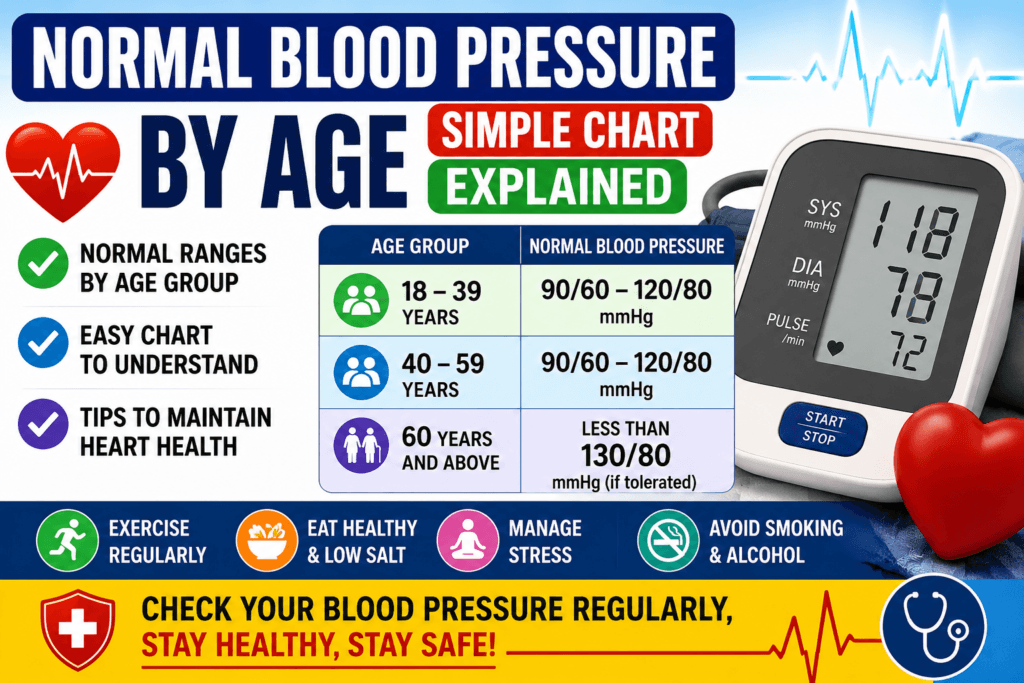
| 18–39 Years | 90/60 – 120/80 mmHg |
| 40–59 Years | 90/60 – 120/80 mmHg |
| 60 Years and Above | Less than 130/80 mmHg (if tolerated) |
Note: According to modern heart health guidelines, the ideal normal blood pressure for most healthy adults remains below 120/80 mmHg, regardless of age.
Blood Pressure Categories
| Category | Blood Pressure Reading |
|---|---|
| Normal | Less than 120/80 mmHg |
| Elevated | 120–129 / Less than 80 |
| Hypertension Stage 1 | 130–139 / 80–89 |
| Hypertension Stage 2 | 140/90 mmHg or higher |
| Hypertensive Crisis | 180/120 mmHg or higher |
Does Blood Pressure Increase With Age?
It is commonly believed that blood pressure naturally becomes higher with age. Although aging may cause arteries to become stiffer, high blood pressure should not simply be accepted as a normal part of aging.
Instead, a healthy normal blood pressure should always be maintained whenever possible. Additionally, lifestyle improvements can significantly reduce the risk of hypertension, even in older adults.
Furthermore, blood pressure may be influenced by:
- Diet
- Exercise habits
- Smoking
- Stress
- Diabetes
- Kidney disease
- Obesity
- Family history
Symptoms of High Blood Pressure
High blood pressure is often called the “silent killer” because symptoms may not be noticed until complications have already developed.
However, some individuals may experience:
- Severe headache
- Dizziness
- Blurred vision
- Chest pain
- Shortness of breath
- Nosebleeds (occasionally)
Therefore, blood pressure should be checked regularly, even if no symptoms are present.
Symptoms of Low Blood Pressure
Although less common, blood pressure that is too low may also become dangerous.
- Fainting
- Weakness
- Blurred vision
- Cold skin
- Dizziness
- Confusion
How Can Normal Blood Pressure Be Maintained?
Fortunately, healthy blood pressure can often be achieved through lifestyle changes. Consequently, the following recommendations are advised:
- Eat plenty of fruits and vegetables.
- Reduce salt intake.
- Exercise for at least 150 minutes every week.
- Maintain a healthy body weight.
- Avoid smoking and tobacco.
- Limit alcohol consumption.
- Sleep for 7–9 hours daily.
- Manage stress through relaxation techniques.
- Take prescribed medicines regularly.
How Often Should Blood Pressure Be Checked?
Adults with a healthy normal blood pressure should have their blood pressure checked at least once every year. However, individuals with hypertension, diabetes, kidney disease, or heart disease should monitor it much more frequently, as recommended by their physician.
Frequently Asked Questions
Is 120/80 considered normal?
Yes. A blood pressure reading below 120/80 mmHg is considered normal for most adults.
Is 140/90 considered high?
Yes. A reading of 140/90 mmHg or above is generally classified as Stage 2 hypertension.
Can stress increase blood pressure?
Yes. Emotional stress may temporarily increase blood pressure. Therefore, stress management is considered an important part of heart health.
Can exercise lower blood pressure?
Yes. Regular physical activity has been shown to lower blood pressure and improve cardiovascular health.
Final Thoughts
Maintaining a normal blood pressure is one of the best ways to protect the heart, brain, kidneys, and blood vessels. Although blood pressure may change slightly with age, healthy values should always be targeted whenever possible. Moreover, regular monitoring, healthy eating, physical activity, and medical advice can greatly reduce the risk of serious complications.
Finally, if repeated blood pressure readings remain above or below the normal range, medical evaluation should be sought promptly so that appropriate treatment can be started if necessary.
Related Articles
- How to Control High Blood Pressure Naturally
- Best Diet for Heart Patients
- Symptoms of Heart Attack You Should Never Ignore
External References
- American Heart Association (AHA)
- Centers for Disease Control and Prevention (CDC)
- World Health Organization (WHO)