
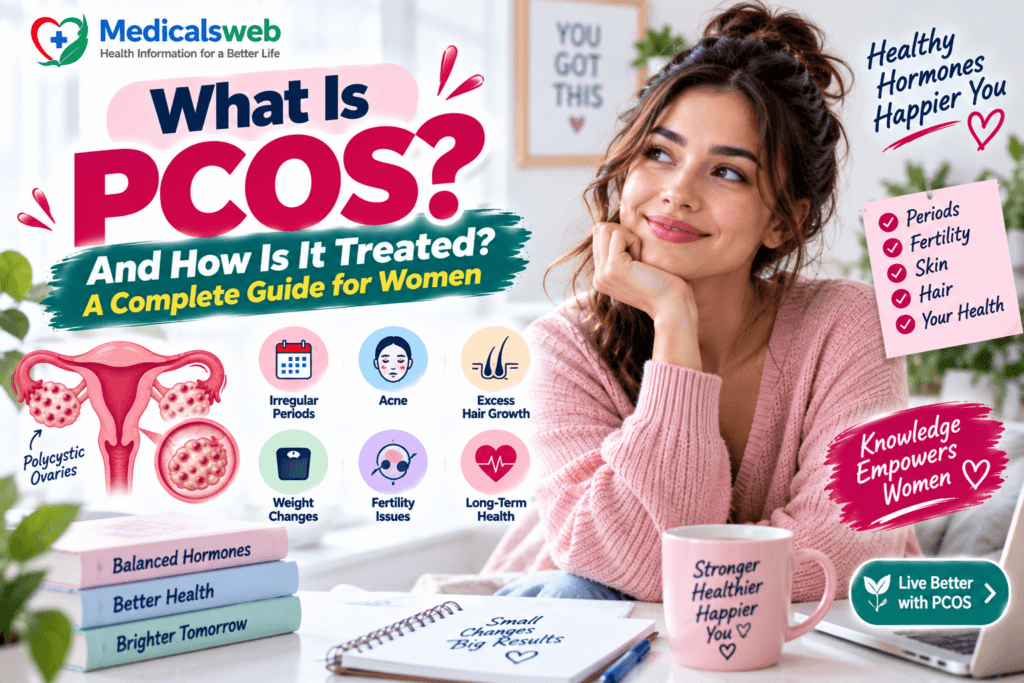
What Is PCOS and How Is It Treated? A Complete Guide for Women
PCOS, or polycystic ovary syndrome, is a common hormonal and metabolic condition that can affect menstrual periods, ovulation, fertility, skin, hair growth, and the body’s response to insulin. Although PCOS is a long-term condition, its symptoms can usually be managed with personalized treatment and healthy lifestyle habits.
🌸 What Is PCOS?
PCOS stands for polycystic ovary syndrome. It is a hormonal condition that can affect the ovaries, menstrual cycle, fertility, skin, hair, and metabolic health.
Despite its name, having PCOS does not mean that a woman must have cysts on her ovaries. Some women with PCOS do not have polycystic-appearing ovaries, while some women without PCOS can have multiple follicles on an ultrasound.
PCOS is also more than a reproductive condition. It can be associated with insulin resistance, abnormal cholesterol levels, type 2 diabetes, high blood pressure, sleep problems, and mental health concerns.
🧬 What Causes PCOS?
The exact cause of PCOS is not completely understood. Researchers believe that genetics, hormone regulation, insulin resistance, and other biological factors can contribute to its development.
Insulin resistance is common in PCOS. When the body does not respond effectively to insulin, the pancreas may produce more insulin. Higher insulin levels can contribute to increased androgen production and problems with ovulation.
PCOS can also run in families, suggesting that genetics play an important role.
🔍 Common PCOS Symptoms
PCOS symptoms vary considerably from woman to woman. Some women have several symptoms, while others have only one or two.
- Irregular or unpredictable menstrual periods
- Fewer menstrual periods than expected
- Difficulty becoming pregnant because of irregular ovulation
- Excess facial or body hair
- Acne or oily skin
- Thinning hair or scalp hair loss
- Weight gain or difficulty losing weight
- Dark, thickened patches of skin, particularly around the neck or body folds
- Signs of insulin resistance
- Mood changes, anxiety, or depression
Not every woman with PCOS will experience all of these symptoms.
🩸 PCOS and Irregular Periods
One of the most recognizable symptoms of PCOS is an irregular menstrual cycle. Some women may have periods only occasionally, while others may experience unpredictable or prolonged bleeding.
Irregular periods often occur because ovulation does not happen regularly. When ovulation is disrupted, the normal hormonal pattern that controls the menstrual cycle can also change.
💇♀️ PCOS, Acne, and Excess Hair Growth
Higher levels or effects of androgen hormones can contribute to acne, increased facial or body hair, and scalp hair thinning.
These symptoms can be particularly distressing, but several treatment options are available. Depending on your situation, treatment may include hormonal contraception, cosmetic hair-removal methods, topical treatments, or anti-androgen medicines.
🩺 How Is PCOS Diagnosed?
There is no single blood test that can diagnose every case of PCOS. Doctors usually consider symptoms, medical history, physical examination, laboratory tests, and sometimes ultrasound.
In adults, the commonly used diagnostic approach looks for at least two of the following three features after other possible causes have been excluded:
- Irregular or absent ovulation, often reflected by irregular menstrual cycles.
- Clinical or biochemical signs of androgen excess, such as excess facial hair, acne, or elevated androgen levels on blood testing.
- Polycystic ovarian morphology on ultrasound or, in appropriate adults, an elevated anti-Müllerian hormone (AMH) level.
Importantly, not every woman needs an ultrasound to be diagnosed with PCOS. For example, when irregular cycles and clear signs of androgen excess are already present, additional ovarian imaging may not be necessary for diagnosis.
🧪 What Tests May Be Done for PCOS?
Depending on your symptoms, a healthcare professional may recommend:
- Pregnancy testing when appropriate
- Androgen hormone testing
- Thyroid testing
- Prolactin testing when indicated
- Blood glucose or diabetes screening
- Cholesterol and other lipid testing
- Blood pressure measurement
- Pelvic ultrasound when clinically appropriate
- Additional hormone tests when another diagnosis is suspected
Testing is individualized because PCOS affects different women in different ways.
💊 How Is PCOS Treated?
There is currently no single treatment that permanently cures PCOS. Instead, treatment focuses on controlling symptoms, protecting long-term health, improving quality of life, and achieving pregnancy when desired.
Your treatment plan should therefore be based on your individual symptoms and goals.
| Main Concern | Possible Treatment Approach |
|---|---|
| Irregular periods | Hormonal contraception or progestogen-based treatment when appropriate |
| Acne | Skin treatments and, when appropriate, hormonal treatment |
| Excess hair | Hair-removal methods, hormonal treatment, and selected anti-androgen medicines |
| Insulin resistance/metabolic risk | Lifestyle management and, for some women, metformin |
| Difficulty becoming pregnant | Ovulation-inducing treatment, with letrozole commonly recommended as first-line medication when appropriate |
🥗 Lifestyle Changes for PCOS
Healthy lifestyle habits are an important part of managing PCOS, regardless of whether weight loss is a goal.
🥦 Eat a Balanced Diet
There is no single “PCOS diet” that works for everyone. A sustainable eating pattern emphasizing vegetables, fruits, whole grains, legumes, lean proteins, healthy fats, and minimally processed foods can support overall health.
If you have insulin resistance or elevated blood glucose, your healthcare professional or dietitian can help you develop an eating plan that fits your needs.
🏃♀️ Stay Physically Active
Regular physical activity can improve cardiovascular fitness, metabolic health, insulin sensitivity, mood, and overall well-being.
Choose activities you can maintain consistently, such as brisk walking, cycling, swimming, strength training, or other enjoyable forms of exercise.
😴 Prioritize Sleep
Good-quality sleep is an important part of overall PCOS management. Women with PCOS may also have an increased risk of obstructive sleep apnea, particularly when other risk factors are present.
Persistent loud snoring, witnessed pauses in breathing during sleep, morning headaches, or significant daytime sleepiness should be discussed with a healthcare professional.
⚖️ PCOS and Weight Management
Some women with PCOS gain weight or have difficulty losing weight. However, PCOS can also occur in women who are not overweight.
If you are above your healthy weight, even modest weight loss may improve some metabolic and reproductive outcomes. However, treatment should never focus only on the number on the scale.
💊 Metformin for PCOS
Metformin is a medication commonly used to treat type 2 diabetes, and it may also be used in some women with PCOS, particularly when metabolic problems or insulin resistance are important concerns.
Metformin can improve insulin sensitivity and may help with metabolic outcomes. It can also have reproductive benefits for some women, although it is not the first-choice fertility medication in every situation.
Common side effects can include gastrointestinal symptoms such as nausea, abdominal discomfort, diarrhea, or bloating. Your doctor can determine whether metformin is appropriate for you.
💊 Birth Control Pills for PCOS
Combined hormonal birth control can be an effective option for women with PCOS who do not currently want to become pregnant.
Depending on the individual, it can help:
- Make menstrual bleeding more predictable
- Reduce androgen-related symptoms
- Improve acne
- Reduce unwanted hair growth over time
- Protect the uterine lining from prolonged exposure to unopposed estrogen
Hormonal contraception is not suitable for everyone, so your doctor should review your medical history and individual risk factors before prescribing it.
🤰 Can Women With PCOS Get Pregnant?
Yes. Many women with PCOS become pregnant, although irregular ovulation can make conception more difficult for some women.
If pregnancy is desired, treatment focuses on restoring or inducing ovulation and addressing other fertility factors.
For women with PCOS who are not ovulating regularly and are trying to conceive, letrozole is commonly recommended as the first-line pharmacological treatment for ovulation induction when appropriate.
👶 PCOS Treatment When You Want to Become Pregnant
Treatment changes when pregnancy is the goal. Some medicines used to control PCOS symptoms are not appropriate during pregnancy or while trying to conceive.
Depending on your situation, your doctor may discuss:
- Ovulation induction with letrozole
- Other fertility medications when appropriate
- Metabolic health optimization
- Preconception health and folic acid
- Evaluation of other fertility factors
- Referral to a fertility specialist if needed
Do not start, stop, or change PCOS medication while trying to conceive without discussing it with your healthcare professional.
🧴 Treatment for PCOS Acne and Excess Hair
Acne and excess hair growth can have a major impact on confidence and quality of life. Treatment can include:
- Topical acne treatments
- Hormonal contraception when appropriate
- Laser hair removal
- Electrolysis
- Hair-removal methods such as shaving or waxing
- Selected anti-androgen medications under medical supervision
Anti-androgen medicines can affect a developing fetus, so effective contraception is important when these medicines are prescribed to someone who could become pregnant.
❤️ Long-Term Health Risks of PCOS
Managing PCOS is not only about periods and fertility. The condition can be associated with several longer-term health concerns.
- Insulin resistance and prediabetes
- Type 2 diabetes
- Abnormal cholesterol levels
- High blood pressure
- Cardiovascular risk factors
- Endometrial hyperplasia
- Sleep apnea
- Depression and anxiety
This is why regular health monitoring is an important part of long-term PCOS care.
🧠 PCOS and Mental Health
PCOS can affect more than physical health. Depression and anxiety are more common among women with PCOS, and symptoms such as acne, excess hair, infertility, weight changes, and irregular periods can affect emotional well-being.
If you are experiencing persistent sadness, anxiety, loss of interest in activities, sleep problems, or feelings that are difficult to manage, speak with a healthcare professional.
🚫 Common Myths About PCOS
Myth 1: PCOS means you have ovarian cysts.
Not necessarily. The name can be misleading. A woman can have PCOS without polycystic-appearing ovaries.
Myth 2: Every woman with PCOS is overweight.
False. PCOS can affect women of all body sizes.
Myth 3: PCOS means you cannot get pregnant.
False. PCOS can make ovulation irregular, but many women with PCOS become pregnant naturally or with fertility treatment.
Myth 4: Birth control pills cure PCOS.
Birth control pills can effectively manage several PCOS symptoms, but they do not permanently cure the underlying condition.
Myth 5: There is one special food that cures PCOS.
There is no single food or supplement proven to cure PCOS. A sustainable, balanced lifestyle is more important than a “miracle” food or treatment.
🌷 How to Manage PCOS Every Day
- Track your menstrual cycles.
- Attend recommended health checkups.
- Stay physically active.
- Choose a balanced and sustainable eating pattern.
- Get enough quality sleep.
- Monitor blood pressure and metabolic health as recommended.
- Take prescribed medication consistently.
- Discuss fertility plans early if you want to become pregnant.
- Pay attention to your mental health.
- Ask your healthcare professional about persistent or worsening symptoms.
📋 PCOS Treatment at a Glance
| Your Goal | Common Approach |
|---|---|
| Regular periods | Hormonal contraception or appropriate progestogen treatment |
| Improve metabolic health | Exercise, balanced nutrition, weight management when appropriate, and medication when indicated |
| Acne | Skin care, topical treatments, and selected hormonal therapies |
| Excess hair | Hair removal, hormonal therapy, and selected anti-androgen medication |
| Trying to conceive | Ovulation induction, usually starting with letrozole when appropriate |
| Mental health | Screening, lifestyle support, counseling, and treatment when needed |
🚨 When Should You See a Doctor?
Talk with a healthcare professional if you have:
- Very irregular or absent periods
- New or worsening excess facial or body hair
- Persistent or severe acne
- Unexplained weight changes
- Difficulty becoming pregnant
- Symptoms suggesting high blood sugar
- Symptoms of sleep apnea
- Depression, anxiety, or significant emotional distress
- Unusual or prolonged vaginal bleeding
Early evaluation can help identify PCOS and other conditions that may produce similar symptoms.
❓ Frequently Asked Questions About PCOS
What is PCOS in simple words?
PCOS is a long-term hormonal and metabolic condition that can interfere with ovulation and menstrual cycles and may cause androgen-related symptoms such as excess hair and acne.
Can PCOS be cured permanently?
There is currently no single permanent cure for PCOS. However, symptoms and associated health risks can often be managed effectively with lifestyle measures, medication, and appropriate medical care.
Can PCOS go away naturally?
PCOS is considered a long-term condition, although symptoms can change over time. Healthy lifestyle habits and appropriate treatment can significantly improve symptoms and health outcomes.
Can I get pregnant if I have PCOS?
Yes. Many women with PCOS become pregnant. If irregular ovulation makes conception difficult, fertility treatments can help induce ovulation.
What is the best treatment for PCOS?
There is no single best treatment for everyone. The right treatment depends on whether your main concern is irregular periods, acne, excess hair, metabolic health, or fertility.
Is metformin good for PCOS?
Metformin can be useful for some women with PCOS, particularly when metabolic problems or insulin resistance are important concerns. It should be used under medical guidance.
What is the best medicine for PCOS if I want to get pregnant?
For women with PCOS who have anovulatory infertility and no other infertility factors, letrozole is generally recommended as the first-line medication for ovulation induction when appropriate.
Can PCOS cause infertility?
PCOS is one of the most common causes of ovulatory infertility because ovulation may not occur regularly. However, fertility treatment can help many women with PCOS become pregnant.
🌷 Final Takeaway
PCOS is a manageable long-term condition, not a life sentence. It can affect periods, ovulation, fertility, skin, hair, weight, metabolism, sleep, and mental health, but personalized treatment can make a significant difference.
The most effective approach is to identify your main symptoms and health risks, determine whether pregnancy is a current goal, and work with a healthcare professional to create an individualized treatment plan.
🔗 Trusted Medical Resources
ACOG – Polycystic Ovary Syndrome (PCOS)
International Evidence-Based PCOS Guideline – Monash University
NIDDK – PCOS and Diabetes