
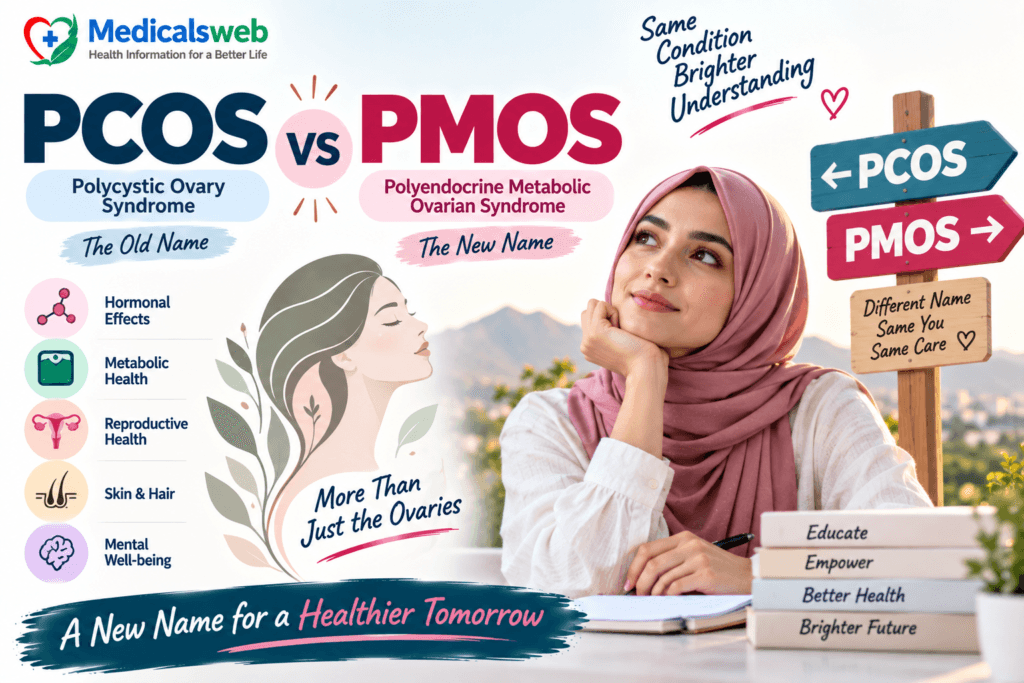
PCOS vs PMOS: What Is the New Name for Polycystic Ovary Syndrome?
If you have searched for PCOS vs PMOS recently, you may have noticed a major change in women’s health terminology. In 2026, the condition long known as Polycystic Ovary Syndrome (PCOS) was officially renamed Polyendocrine Metabolic Ovarian Syndrome (PMOS).
But is PMOS a different disease? No. PMOS is the new name for the same condition previously called PCOS. The change is intended to better describe the condition’s hormonal, metabolic, ovarian, reproductive, and wider health effects.
🌸 What Is the New Name for PCOS?
The new name is:
Formerly known as Polycystic Ovary Syndrome (PCOS)
The name change followed a global consensus process involving patients, healthcare professionals, researchers, and professional organizations. The process took many years and involved organizations from around the world.
The goal was to use a name that better reflects the complex nature of the condition rather than suggesting that it is primarily a problem of ovarian cysts.
🔎 PCOS vs PMOS: Are They Different Conditions?
No. PCOS and PMOS are not two different diseases. They refer to the same underlying condition.
| Old Name | New Name |
|---|---|
| Polycystic Ovary Syndrome | Polyendocrine Metabolic Ovarian Syndrome |
| Abbreviation: PCOS | Abbreviation: PMOS |
| Previous terminology | New terminology from 2026 |
| Same underlying condition | Same underlying condition |
🧬 Why Was PCOS Renamed PMOS?
The old name created several problems. The words “polycystic ovary” can make people think that the condition is mainly caused by ovarian cysts.
However, the condition is much more complex. It can involve hormones, metabolism, reproductive function, the ovaries, skin, weight, mental health, and long-term health risks.
In addition, the ovarian appearance sometimes associated with the condition generally represents multiple small follicles rather than conventional pathological ovarian cysts.
The new terminology attempts to make the name more scientifically descriptive and reduce the misconception that the condition is simply about cysts on the ovaries.
🧩 What Does PMOS Mean?
Each part of the new name is intended to describe an important aspect of the condition.
1. Polyendocrine
Polyendocrine highlights that the condition involves multiple hormonal and endocrine pathways rather than being limited to the ovaries.
2. Metabolic
Metabolic reflects the connection between the condition and metabolic health. Some women with PMOS have insulin resistance, abnormal blood glucose, abnormal cholesterol levels, or other metabolic risk factors.
3. Ovarian
Ovarian remains part of the name because ovarian function and ovulation are important aspects of the condition.
4. Syndrome
Syndrome means a group of related signs, symptoms, and health features that occur together rather than one single disease characteristic.
📅 When Did PCOS Become PMOS?
The international name change was announced in May 2026. The new terminology followed a global consensus process involving dozens of professional and patient organizations.
The updated international evidence-based guideline now uses Polyendocrine Metabolic Ovarian Syndrome (PMOS) as the preferred terminology, while recognizing PCOS as the previous name.
Because millions of women, doctors, hospitals, medical records, websites, and research papers have used the term PCOS for decades, the transition will not happen overnight.
📚 Why Will You Still See the Term PCOS?
If you search online or visit a healthcare professional, you may still see PCOS frequently. This is expected during the transition period.
Older medical research, patient records, educational materials, websites, and search engines contain enormous amounts of information under the PCOS name.
Therefore, both terms may appear together for some time:
or
PMOS/PCOS
This approach helps patients and healthcare professionals understand that the new and old names refer to the same condition.
🩺 Has the Diagnosis Changed?
The name has changed, but the core diagnostic approach has not suddenly changed.
The updated international guideline states that the existing evidence-based recommendations remain in place during the terminology transition.
In adults, diagnosis generally involves assessing features such as:
- Irregular or absent ovulation
- Clinical signs of increased androgen activity
- Elevated androgen levels on appropriate blood testing
- Polycystic ovarian morphology when relevant
- Other potential causes of similar symptoms
Not every woman needs an ovarian ultrasound to establish the diagnosis. The appropriate evaluation depends on the individual clinical picture.
🩸 Are PMOS Symptoms Different From PCOS Symptoms?
No. Because PMOS is the new name for PCOS, the symptoms being discussed are essentially the same.
Common symptoms and features can include:
- Irregular menstrual periods
- Infrequent or absent periods
- Irregular ovulation
- Difficulty becoming pregnant
- Excess facial or body hair
- Acne
- Scalp hair thinning
- Weight changes
- Insulin resistance or metabolic abnormalities
- Mood and mental-health concerns
However, not every woman experiences all of these features.
❤️ Why the Name Change Is Important for Women
The name change is more than replacing one acronym with another. Supporters of the change hope that a more accurate name will help people understand that the condition can affect the entire body.
The previous terminology could lead some people to believe that ovarian cysts were the central problem. This could distract attention from important issues such as metabolic health, insulin resistance, cardiovascular risk factors, fertility, mental health, and hormonal symptoms.
A broader name may encourage more comprehensive assessment and care.
💊 Has PMOS Treatment Changed?
No major treatment change occurred simply because the name changed.
Treatment remains individualized according to symptoms, health risks, age, and reproductive goals.
| Main Concern | Possible Management |
|---|---|
| Irregular periods | Hormonal contraception or appropriate progestogen treatment |
| Insulin resistance/metabolic risk | Lifestyle measures and medication such as metformin when appropriate |
| Acne | Topical and hormonal treatments when appropriate |
| Excess hair | Hair removal, hormonal treatment, and selected anti-androgen medicines |
| Difficulty becoming pregnant | Ovulation-induction treatment, with letrozole commonly used as first-line treatment when appropriate |
| Metabolic health | Physical activity, balanced nutrition, weight management when appropriate, and regular monitoring |
🤰 Can Women With PMOS Still Get Pregnant?
Yes. The name change does not change fertility.
PMOS can cause irregular ovulation, which may make it more difficult for some women to become pregnant. However, many women with the condition become pregnant naturally, while others may need fertility treatment.
When pregnancy is desired, treatment is focused on restoring or inducing ovulation and addressing other fertility factors.
🥗 Can Lifestyle Changes Help PMOS?
Lifestyle management remains an important part of care for women with PMOS.
- Choose a balanced and sustainable eating pattern.
- Stay physically active.
- Prioritize adequate sleep.
- Manage stress in healthy ways.
- Monitor blood pressure and metabolic health.
- Maintain a healthy weight when appropriate for you.
- Avoid smoking and excessive alcohol consumption.
There is no single “PMOS diet” that cures the condition. The best approach is one that is nutritionally balanced, sustainable, and suited to your individual health needs.
🚫 Does PMOS Mean You Have Ovarian Cysts?
No. This is one of the most important points behind the name change.
The term “polycystic” in the old name could be misleading because the ovarian appearance associated with the condition generally involves multiple small follicles rather than conventional pathological ovarian cysts.
Furthermore, ovarian cysts are not required for every person to meet diagnostic criteria for the condition.
🔄 PCOS vs PMOS: What Actually Changed?
| Question | Answer | ||
|---|---|---|---|
| Is PMOS a new disease? | No. It is the new name for PCOS. | ||
| Did the symptoms suddenly change? | No. The same condition is being described with new terminology. | ||
| Did treatment suddenly change? | No. Evidence-based treatment principles remain in place. | ||
| Are ovarian cysts required? | No. | ||
| Will doctors still use PCOS? | Yes, during the transition period, both terms may be seen. | ||
| What is the new preferred term? | Polyendocrine Metabolic Ovarian Syndrome (PMOS). |
🌎 Will Everyone Start Using PMOS Immediately?
Probably not. Changing the terminology used across medical records, research studies, health websites, patient organizations, insurance systems, and everyday language takes time.
The international guideline describes the implementation as a transition rather than an overnight replacement. Therefore, patients may continue seeing PCOS for years while PMOS becomes increasingly common.
For search engines and patient education, it is also useful to mention both terms. Someone searching for “PCOS” should still be able to find accurate information even as the medical community adopts “PMOS.”
🧠 What Does the PMOS Name Tell Us About the Condition?
The new terminology reinforces an important medical message: this condition is not simply about the ovaries.
Hormonal regulation, metabolism, reproductive health, skin and hair symptoms, fertility, weight, mental health, and long-term cardiometabolic risks can all be relevant.
That means good care should look at the whole person rather than focusing only on menstrual cycles or an ultrasound image of the ovaries.
❓ Frequently Asked Questions About PCOS vs PMOS
Is PCOS now called PMOS?
Yes. In 2026, the condition previously known as Polycystic Ovary Syndrome (PCOS) was renamed Polyendocrine Metabolic Ovarian Syndrome (PMOS).
What does PMOS stand for?
PMOS stands for Polyendocrine Metabolic Ovarian Syndrome.
Is PMOS the same as PCOS?
Yes. PMOS and PCOS refer to the same underlying condition. PMOS is the new terminology, while PCOS is the previous name.
Why was PCOS renamed?
The name was changed because “polycystic ovary syndrome” can make the condition appear to be primarily about ovarian cysts, while the condition has important endocrine, metabolic, reproductive, and wider health effects.
Do I need a new diagnosis if I already have PCOS?
No. The name change itself does not mean that someone with an established PCOS diagnosis suddenly needs a completely new diagnosis. Your healthcare professional can explain how the terminology is being recorded during the transition.
Has PMOS changed the treatment of PCOS?
No major treatment change has resulted simply from the name change. Current evidence-based treatment continues to focus on individual symptoms, metabolic health, reproductive goals, and long-term health risks.
Can you have PMOS without ovarian cysts?
Yes. Ovarian cysts are not required for diagnosis. The old terminology could create confusion because the ovarian findings associated with the condition are generally related to follicles rather than conventional ovarian cysts.
Should I search for PCOS or PMOS online?
For now, using both terms can be helpful. Many established medical resources and research papers still use PCOS, while newer 2026 guidance increasingly uses PMOS.
🌷 Final Takeaway
PCOS vs PMOS is not a comparison between two different diseases. PMOS, or Polyendocrine Metabolic Ovarian Syndrome, is the new name for the condition previously known as Polycystic Ovary Syndrome.
The name change was made to better reflect the condition’s broader hormonal, metabolic, ovarian, reproductive, and health effects and to reduce the misconception that it is simply a disorder of ovarian cysts.
For women who already have PCOS, the most important message is reassuring: your condition has not suddenly changed because the name has changed. The terminology is evolving, while evidence-based diagnosis and treatment continue during the transition.
🔗 Trusted Medical Resources
- International Evidence-Based PMOS Guideline: Monash University / International PCOS Network
- PCOS Is Now PMOS: American Society for Reproductive Medicine (ASRM)
- PMOS Name Change: Endocrine Society
- Scientific Consensus: The Lancet / Global Name Change Consortium
- PMOS Information: Johns Hopkins Medicine