How to Control High Blood Pressure Naturally Without Pills
High blood pressure is one of the most common health concerns worldwide. Unfortunately, it often develops without obvious symptoms. As a result, many people may not know that their blood pressure is elevated until a routine checkup reveals the problem.
The good news is that healthy lifestyle changes can make a significant difference. For example, improving your diet, reducing salt intake, becoming more physically active, managing stress, and maintaining a healthy weight may help improve blood pressure naturally.
What Is High Blood Pressure?
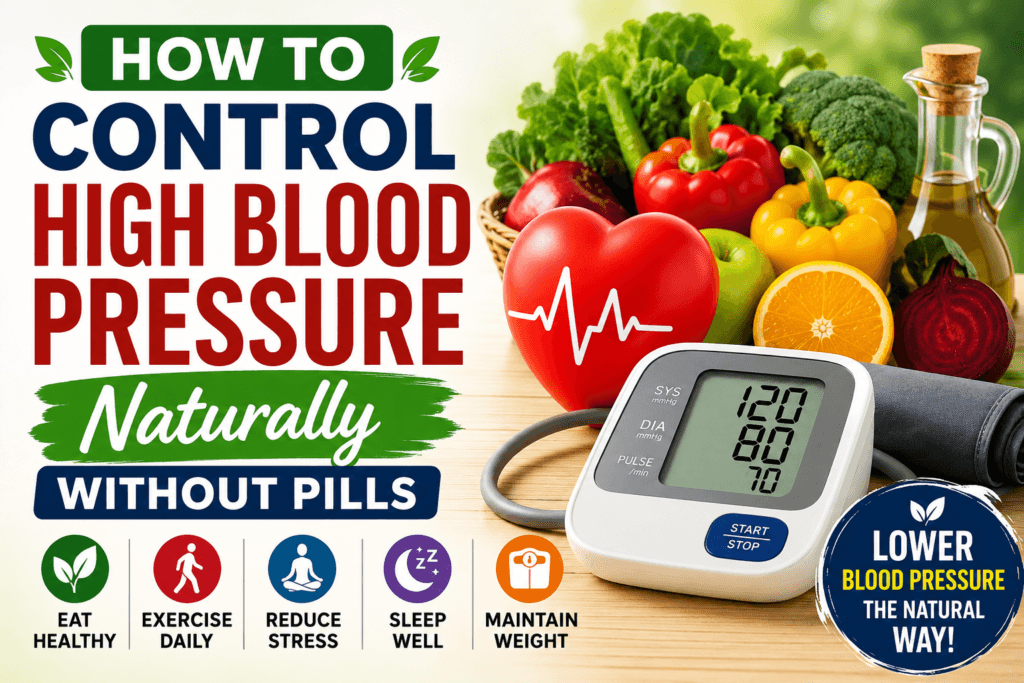
Blood pressure measures the force of blood pushing against the walls of your arteries. It is usually written as two numbers, such as 120/80 mm Hg.
- Systolic blood pressure: The top number, representing the pressure when your heart beats.
- Diastolic blood pressure: The bottom number, representing the pressure when your heart rests between beats.
Persistently high blood pressure can increase the risk of serious health problems, including heart disease and stroke. Therefore, regular monitoring and healthy lifestyle habits are extremely important.
You can also read our detailed guide on Normal Blood Pressure Chart to better understand healthy and unhealthy blood pressure readings.
Can High Blood Pressure Be Controlled Naturally Without Pills?
In some people, lifestyle changes can significantly improve blood pressure, particularly when readings are only mildly elevated. However, this does not mean that everyone can control hypertension without medication.
Several factors can influence treatment, including:
- Age
- Genetics and family history
- Weight
- Dietary habits
- Physical activity
- Kidney problems
- Diabetes
- Heart disease
- The severity of high blood pressure
10 Natural Ways to Control High Blood Pressure
1. Follow a Heart-Healthy Diet
One of the most effective ways to support healthy blood pressure is to improve your daily diet. The DASH eating plan is widely recommended for people with high blood pressure.
DASH stands for Dietary Approaches to Stop Hypertension.
Eat More Of:
- Fresh fruits
- Vegetables
- Whole grains
- Beans and lentils
- Nuts and seeds
- Fish
- Lean protein
- Low-fat dairy products
At the same time, reduce heavily processed foods, excessive salt, sugary drinks, and foods high in unhealthy fats.
For more information about heart-friendly foods, visit our Healthy Heart Foods Guide.
2. Reduce Salt Intake
Eating too much sodium can raise blood pressure. Unfortunately, sodium is not found only in table salt. Large amounts may also be hidden in processed and packaged foods.
Foods Often High in Salt:
- Pickles
- Instant noodles
- Processed meat
- Fast food
- Packaged snacks
- Chips
- Processed soups
- Ready-made meals
Instead of adding extra salt, try using lemon, garlic, ginger, herbs, and spices to add flavor to your meals.
3. Eat More Fruits and Vegetables
Fruits and vegetables contain important nutrients and dietary fiber that support overall cardiovascular health. Therefore, adding more plant-based foods to your daily meals may help support healthier blood pressure.
- Bananas
- Oranges
- Apples
- Guava
- Tomatoes
- Spinach
- Carrots
- Beans
- Leafy green vegetables
However, people with kidney disease or certain medical conditions should speak with a healthcare professional before increasing potassium intake or using potassium-containing salt substitutes.
4. Exercise Regularly
Regular exercise is one of the most powerful natural tools for improving blood pressure. Physical activity helps strengthen the heart and supports healthy circulation.
Simple Exercise Options:
- Brisk walking
- Cycling
- Swimming
- Jogging
- Dancing
- Gardening
- Strength training
You do not need to become an athlete overnight. Instead, start slowly and gradually increase your physical activity.
5. Maintain a Healthy Weight
Carrying excess body weight can place additional strain on the heart and blood vessels. Consequently, maintaining a healthy weight may help improve blood pressure.
Focus on sustainable habits instead of extreme diets.
- Control portion sizes
- Reduce sugary drinks
- Eat more vegetables
- Walk regularly
- Choose whole foods
- Stay physically active
6. Manage Stress
Stress can temporarily affect blood pressure. In addition, long-term stress may lead to unhealthy habits such as poor sleep, overeating, smoking, and physical inactivity.
Try healthy stress-management techniques such as:
- Deep breathing
- Meditation
- Prayer
- Walking outdoors
- Listening to relaxing music
- Taking breaks from work
- Spending time with family and friends
Although stress cannot always be avoided, learning how to respond to stressful situations in a healthier way can support overall well-being.
7. Get Enough Sleep
Quality sleep is important for heart health and healthy blood pressure. Poor sleep may negatively affect the body’s ability to regulate important functions.
Better Sleep Habits:
- Maintain a regular bedtime
- Reduce screen time before sleeping
- Avoid excessive caffeine late in the day
- Keep your bedroom quiet and comfortable
- Exercise regularly during the day
If you snore loudly or experience breathing interruptions during sleep, consult a healthcare professional because sleep disorders may affect blood pressure control.
8. Avoid Smoking and Tobacco
Smoking damages blood vessels and significantly increases the risk of heart disease and stroke. Nicotine can also temporarily increase blood pressure.
Therefore, avoiding tobacco products is one of the most important steps you can take to protect your heart and blood vessels.
9. Limit Alcohol
Excessive alcohol consumption can negatively affect blood pressure and overall cardiovascular health. Therefore, limiting or avoiding alcohol may be beneficial for many people.
10. Check Your Blood Pressure Regularly
High blood pressure often causes no obvious symptoms. For this reason, regular monitoring is extremely important.
Regular Monitoring Can Help You:
- Track your progress
- See whether lifestyle changes are working
- Identify consistently high readings
- Provide useful information to your doctor
Using a reliable home blood pressure monitor can make it easier to understand changes over time.
Best Foods for Healthy Blood Pressure
❤️ Choose More Often
- Fresh fruits
- Vegetables
- Leafy greens
- Beans and lentils
- Whole grains
- Unsalted nuts
- Seeds
- Fish
- Low-fat yogurt
⚠️ Limit These Foods
- Highly processed foods
- Excessively salty foods
- Processed meat
- Sugary drinks
- Fast food
- Salted snacks
A Simple Daily Routine for Better Blood Pressure
🌅 Morning
- Eat a healthy breakfast
- Take a short walk
- Drink water regularly
- Practice a few minutes of relaxation
☀️ Afternoon
- Include vegetables with your meal
- Choose water instead of sugary drinks
- Take short walking breaks
🌙 Evening
- Eat a balanced dinner
- Avoid excessive salt
- Take a relaxing walk
- Prepare for adequate sleep
Can You Stop Blood Pressure Medication Naturally?
No one should stop prescribed blood pressure medication without medical advice.
Some people may experience improved blood pressure after making significant lifestyle changes. Nevertheless, whether medication can be reduced or stopped depends on your individual health condition.
Your doctor should evaluate your blood pressure readings and overall health before making any changes to your treatment plan.
When Should You Seek Emergency Medical Help?
Seek emergency medical attention if very high blood pressure occurs along with symptoms such as:
- Chest pain
- Severe shortness of breath
- Sudden weakness or numbness
- Difficulty speaking
- Sudden vision problems
- Severe neurological symptoms
These symptoms may indicate a serious medical emergency and should never be treated with home remedies alone.
Frequently Asked Questions
Can walking lower blood pressure?
Regular physical activity, including walking, can support healthier blood pressure and improve cardiovascular fitness.
What is the best diet for high blood pressure?
A heart-healthy eating pattern rich in fruits, vegetables, whole grains, beans, nuts, and healthy protein sources can support better blood pressure control. The DASH eating plan is a well-known example.
Can stress raise blood pressure?
Stress can temporarily increase blood pressure. In addition, chronic stress may contribute to unhealthy behaviors that affect heart health.
Can I control high blood pressure without pills?
Some people with mildly elevated blood pressure may see significant improvement through lifestyle changes. However, many people still require medication. Always follow the advice of your healthcare professional.
Final Thoughts
Learning how to control high blood pressure naturally can be an important step toward better heart health. Healthy eating, reduced salt intake, regular exercise, weight management, stress reduction, quality sleep, and avoiding tobacco can all support healthier blood pressure levels.
However, there is no single miracle food or quick home remedy. Instead, long-term improvement usually comes from consistently following healthy habits.
Medical Disclaimer
This article is for general educational purposes only and does not replace professional medical advice, diagnosis, or treatment. Always consult a qualified healthcare professional regarding your blood pressure and any changes to prescribed medication.
Helpful External Resources: