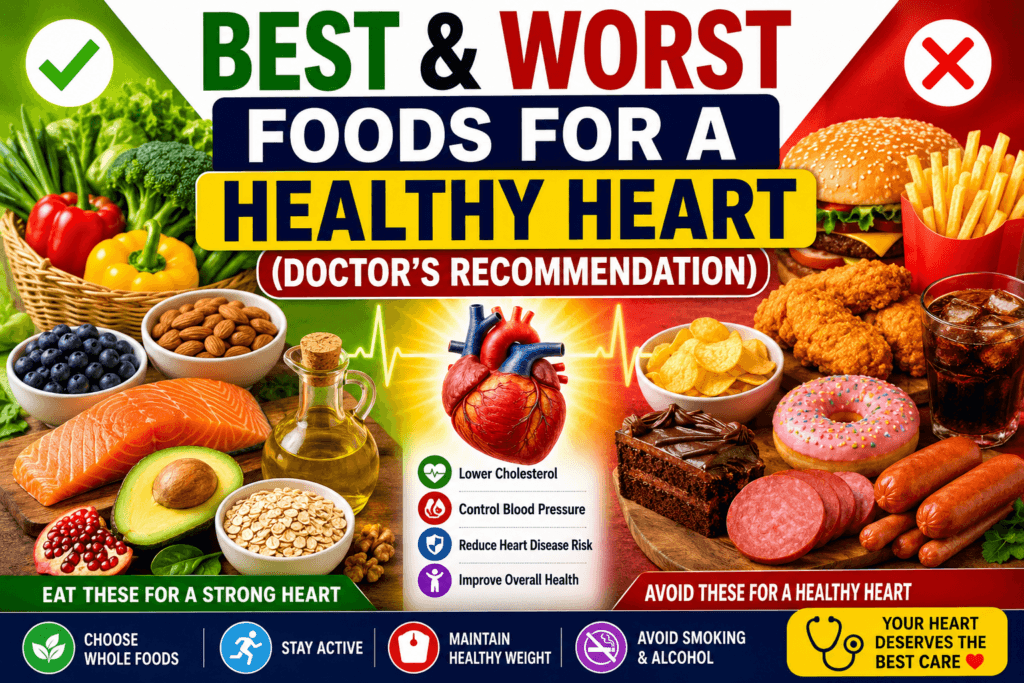
Best and Worst Foods for a Healthy Heart (Doctor’s Recommendation)
Foods can play an important role in protecting the heart, controlling blood pressure, maintaining healthy cholesterol levels, and reducing cardiovascular risk.
Why Do Foods Matter for Heart Health?
The foods we eat every day can influence several important cardiovascular risk factors. For example, dietary choices can affect blood pressure, cholesterol, blood sugar, body weight, and inflammation. Therefore, the quality of the overall diet is considered more important than relying on one particular “super food.”
According to the American Heart Association’s 2026 dietary guidance, a heart-healthy eating pattern should emphasize vegetables and fruits, whole grains, healthy protein sources, unsaturated fats, and minimally processed foods. At the same time, sodium, added sugars, saturated fat, and highly processed foods should be limited.
Best Foods for a Healthy Heart
1. Vegetables
Vegetables should be included regularly because they provide fiber, vitamins, minerals, and beneficial plant compounds. Leafy greens such as spinach, kale, lettuce, and mustard greens can be excellent choices. Moreover, tomatoes, carrots, broccoli, cauliflower, and bell peppers can add variety to the diet.
2. Fruits
Fresh fruits are among the most useful foods for a heart-friendly diet. Apples, oranges, berries, bananas, guava, pomegranate, and other whole fruits provide fiber and important micro nutrients.
However, whole fruit is generally preferable to fruit drinks or juices because the whole fruit provides more fiber and is usually more filling. The World Health Organization recommends regular consumption of fruits and vegetables as part of a healthy dietary pattern.
3. Whole Grains
Whole grains such as oats, barley, brown rice, whole-wheat roti, whole-grain bread, and other minimally processed grains can provide dietary fiber and other nutrients. They can be used instead of refined grains to make everyday meals more heart-friendly.
For example, replacing some refined flour products with whole-wheat options can be a simple dietary improvement. The American Heart Association recommends choosing foods made mostly with whole grains rather than refined grains.
4. Beans, Lentils and Other Legumes
Lentils, chickpeas, kidney beans, black beans, peas, and other legumes are affordable sources of plant protein and fiber. Consequently, they can be used to replace some higher-fat animal protein in meals.
For Pakistani families, dishes such as dal, chana, lobia, and beans can therefore be incorporated into a heart-healthy eating pattern. The main concern should be the amount of salt, oil, and ghee added during cooking.
5. Nuts and Seeds
Unsalted almonds, walnuts, pistachios, peanuts, chia seeds, and flax seeds can provide unsaturated fats, protein, fiber, and other nutrients. However, portion size should still be considered because nuts and seeds are calorie-dense.
Whenever possible, unsalted varieties should be selected. The American Heart Association specifically recommends nuts and other plant-based protein sources as part of a heart-healthy eating pattern.
6. Fish
Fish can be an excellent protein choice, particularly when it replaces fatty or processed meats. Salmon, sardines, mackerel, trout, and other oily fish provide omega-3 fatty acids.
The American Heart Association recommends eating fish, particularly non-fried fish, at least twice a week as part of a heart-healthy dietary pattern.
7. Healthy Plant Oils
Unsaturated plant oils can be used instead of butter, ghee, lard, and other fats that are high in saturated fat. Olive, canola, sunflower, soybean, and other appropriate liquid plant oils can be useful choices.
Nevertheless, even healthier oils should be used in reasonable amounts because all oils contain calories.
Worst Foods for Heart Health
Not all foods are equally harmful, and occasional consumption of an unhealthy food does not automatically cause heart disease. However, regularly eating foods high in sodium, saturated fat, trans fat, added sugar, or calories can make a heart-healthy diet much more difficult to maintain.
1. Processed Meats
Processed meats such as sausages, salami, bacon, hot dogs, and similar products should be limited. These foods can contain substantial amounts of sodium and saturated fat.
Instead, lean poultry, fish, beans, lentils, or other healthier protein sources can be selected more often.
2. Deep-Fried Foods
Regular consumption of deep-fried foods can increase the intake of calories and unhealthy fats. Fried chicken, French fries, fried snacks, samosas, pakoras, and other fried foods should therefore be eaten less frequently.
Baking, grilling, steaming, boiling, or air-frying can be used as alternatives.
3. Foods High in Trans Fat
Industrial trans fats are particularly undesirable for cardiovascular health. They may be found in some commercially baked and fried products, depending on how they are manufactured.
The World Health Organization recommends keeping trans-fat intake below 1% of total energy and advises that industrially produced trans fats should be eliminated from the food supply.
4. Excess Ghee, Butter and Saturated Fat
Ghee and butter are commonly used in South Asian cooking. However, large amounts can substantially increase saturated fat intake. Saturated fat can raise LDL cholesterol, which is an important cardiovascular risk factor.
Therefore, smaller quantities should be used, while unsaturated plant oils, nuts, seeds, legumes, and fish should be included more frequently. The American Heart Association recommends limiting saturated fat and replacing it with healthier unsaturated fats.
5. Sugary Drinks and Excess Added Sugar
Soft drinks, sweetened juices, energy drinks, sweetened tea, desserts, cakes, biscuits, and other foods with large amounts of added sugar can contribute significant calories without providing much nutritional value.
Therefore, water, unsweetened tea, or other low-sugar beverages can usually be preferred.
6. Very Salty Foods
Too much sodium can contribute to raised blood pressure. Consequently, heavily salted foods, salty snacks, pickles, processed meats, instant noodles, packaged sauces, and other high-sodium products should be limited.
The WHO recommends that adults consume less than 5 grams of salt per day, including salt present in processed foods.
Healthy Foods vs. Foods to Limit
| Choose More Often | Limit More Often |
|---|---|
| Vegetables | Deep-fried foods |
| Whole fruits | Sugary drinks |
| Whole grains | Refined and highly processed foods |
| Lentils and beans | Processed meats |
| Unsalted nuts | Salty snacks |
| Fish | Foods high in trans fat |
| Healthy plant oils | Excess butter and ghee |
A Simple Heart-Healthy Plate
A simple plate method can make healthy eating easier. Half of the plate can be filled with vegetables, one-quarter can be filled with whole grains or another high-fiber carbohydrate, and one-quarter can be filled with a healthy protein source such as fish, skinless poultry, beans, or lentils.
What About Your Favorite Foods?
A heart-healthy diet does not mean that every favorite food must be completely eliminated. Instead, portion size, frequency, cooking method, and the overall dietary pattern should be considered.
For example, a traditional meal can often be made healthier by reducing oil and salt, adding vegetables, choosing whole grains, and using lean protein. Therefore, small changes can be maintained more easily than extreme diets.
Foods and Heart Health: The Bottom Line
The best foods for your heart are generally those that are minimally processed and rich in vegetables, fruits, whole grains, legumes, nuts, fish, and healthier unsaturated fats. On the other hand, foods high in sodium, added sugars, saturated fats, trans fats, and excessive calories should be limited.
Most importantly, heart health is influenced by the overall dietary pattern, not by one food eaten occasionally. The latest American Heart Association dietary guidance also emphasizes this broader pattern rather than focusing on individual “super foods.”
Related Articles
- 👉 How to Control High Blood Pressure Naturally
- 👉 Normal Blood Pressure by Age – Simple Chart Explained
- 👉 Best Exercises for Heart Patients – Doctor’s Guide