Stress Hormones and Their Direct Effect on the Heart
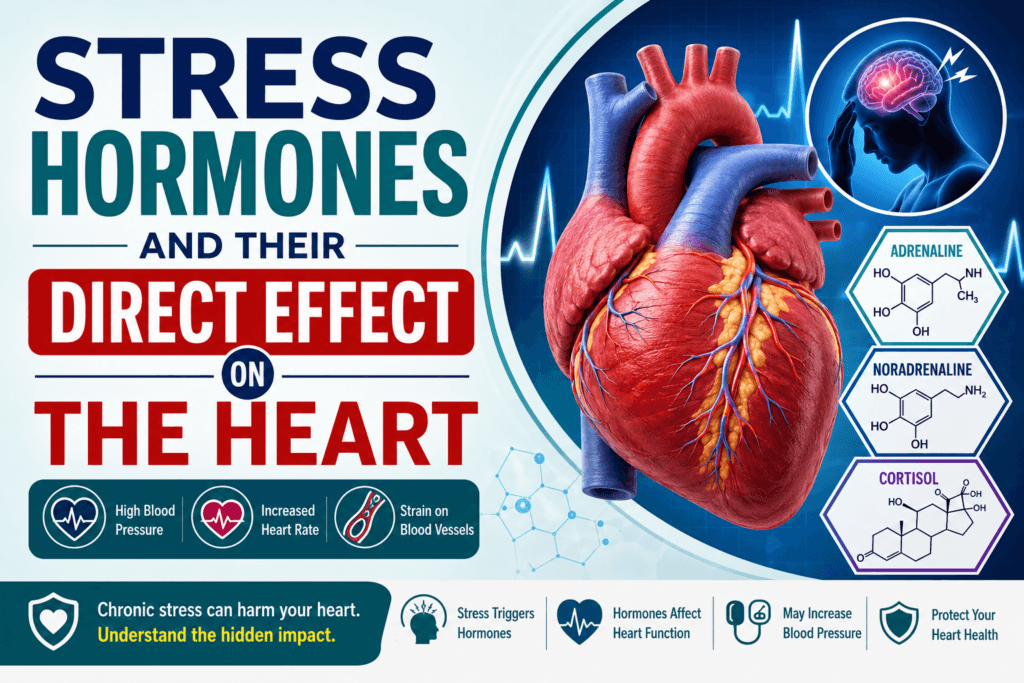
When the body is exposed to stress, stress hormones such as adrenaline, nor-adrenaline, and cortisol are released. These hormones are useful during short-term stress, but their prolonged elevation may place additional strain on the heart and blood vessels.
Stress is experienced by almost everyone. However, its effects on cardiovascular health are often underestimated. When emotional, physical, or psychological stress is experienced, a complex hormonal response is activated. As a result, several stress hormones are released to prepare the body for a rapid response.
Initially, this response is protective. The heart is made to beat faster, blood pressure is increased, and more blood is directed toward organs and muscles that may be needed during an emergency. However, when stress becomes frequent or prolonged, these changes may become harmful.
In this article, the major stress hormones will be discussed, along with their direct effects on the heart, blood pressure, heart rhythm, blood vessels, and overall cardiovascular health.
What Are Stress Hormones?
Stress hormones are chemical messengers that are released when the body perceives danger, pressure, fear, or another stressful situation. The main hormones involved in the stress response are:
| Hormone | Main Effect | ||
|---|---|---|---|
| Adrenaline | Heart rate and force of contraction are increased. | ||
| nor-adrenaline | Blood vessels are constricted and blood pressure may be increased. | ||
| Cortisol | Metabolism, blood glucose, and blood pressure are influenced during prolonged stress. |
Adrenaline and nor-adrenaline are mainly released through activation of the sympathetic nervous system. Meanwhile, cortisol is produced by the adrenal cortex through activation of the hypothalami-pituitary-adrenal axis.
How Stress Hormones Affect the Heart
1. Heart Rate Is Increased
One of the earliest effects of stress hormones is an increase in heart rate. When adrenaline and nor-adrenaline are released, the heart is stimulated to beat faster and more forcefully.
Consequently, cardiac output is increased and more blood is delivered to the muscles and vital organs. This response can be beneficial when immediate physical action is required. However, if the response is repeatedly activated, unnecessary cardiovascular strain may be produced.
A temporary increase in heart rate during stress is a normal physiological response. Persistent or unexplained palpitations, however, should be medically evaluated.
2. Blood Pressure Can Rise
Blood pressure is commonly increased during acute stress. This occurs because the heart is made to pump more forcefully while certain blood vessels are constricted.
Therefore, repeated activation of the stress response may contribute to increased blood pressure, particularly in people who are already at risk of hypertension.
Over time, sustained high blood pressure can place additional workload on the heart. Consequently, the heart muscle may become thicker and cardiovascular complications may become more likely.
3. Heart Rhythm May Be Affected
Palpitations are commonly experienced during stressful situations. Because adrenaline can influence the electrical activity of the heart, changes in heart rhythm may sometimes be triggered.
In most healthy individuals, occasional stress-related palpitations are not dangerous. Nevertheless, persistent, severe, or recurrent palpitations should not simply be attributed to stress.
Warning Signs
- Persistent chest pain
- Severe shortness of breath
- Fainting or near-fainting
- Very rapid or irregular heartbeat
- Sudden unexplained sweating or weakness
These symptoms should not automatically be blamed on stress. Medical assessment may be required.
4. The Heart’s Oxygen Demand Is Increased
When the heart is made to beat faster and more forcefully, its requirement for oxygen is also increased. At the same time, changes in vascular tone may affect coronary blood flow.
As a result, people with coronary artery disease may experience chest discomfort during severe emotional or physical stress. In susceptible individuals, a significant imbalance between oxygen supply and demand may be produced.
Cortisol and Heart Health
Cortisol is one of the most important hormones involved in the body’s response to prolonged stress. It helps regulate blood glucose, metabolism, blood pressure, and the immune response.
However, when cortisol levels remain elevated for prolonged periods, several unfavorable changes may be promoted. Blood pressure may be affected, sleep may be disrupted, appetite may increase, and metabolic health may be negatively influenced.
Furthermore, chronic stress may encourage unhealthy behaviors such as overeating, smoking, excessive caffeine consumption, and physical inactivity. These factors can further increase cardiovascular risk.
The cardiovascular effects of chronic stress are not caused by hormones alone. Lifestyle changes associated with long-term stress may also contribute significantly to cardiovascular risk.
Stress Hormones and Blood Vessels
The effects of stress hormones are not limited to the heart. Blood vessels are also affected during the stress response.
During acute stress, certain blood vessels are constricted so that blood can be redirected toward organs and muscles involved in the immediate response. Consequently, blood pressure may rise.
If sympathetic activation is repeatedly experienced over a long period, vascular function may be adversely affected. Therefore, chronic stress should be regarded as one of several factors that may contribute to poor cardiovascular health.
Can Severe Stress Trigger a Heart Attack?
Severe emotional or physical stress can place considerable demands on the cardiovascular system. In people with underlying coronary artery disease, intense stress may contribute to angina and, in some circumstances, may be associated with a heart attack.
In addition, a condition known as Takotsubo cardiomyopathy, or stress cardiomyopathy, may develop after severe emotional or physical stress. Temporary weakening of the heart muscle can occur in this condition.
However, chest pain should never be assumed to be caused by anxiety or stress without appropriate assessment. Especially when symptoms are severe or sudden, urgent medical evaluation should be obtained.
Why Chronic Stress Is More Concerning
Short-term stress is a normal physiological response. The greater concern is chronic stress, during which the body’s stress response is repeatedly activated.
When this happens, heart rate and blood pressure may repeatedly be increased. Moreover, sleep quality may be reduced and unhealthy eating or physical inactivity may become more common.
Therefore, cardiovascular risk may be influenced by both the direct effects of stress hormones and the indirect effects of stress-related lifestyle changes.
How Can the Effects of Stress Be Reduced?
Several healthy measures can be adopted to reduce chronic stress and support cardiovascular health:
- Regular exercise should be performed according to individual health status.
- Adequate sleep should be maintained consistently.
- Relaxation techniques such as controlled breathing and meditation may be practiced.
- Smoking should be avoided because it can further increase cardiovascular risk.
- A healthy diet should be followed, particularly when blood pressure or cholesterol is elevated.
- Caffeine intake should be moderated if it worsens palpitations or anxiety.
- Social support should be maintained whenever possible.
- Professional help should be considered when stress becomes difficult to manage.
When Should a Doctor Be Consulted?
Medical advice should be obtained when stress is accompanied by persistent chest pain, unexplained shortness of breath, fainting, significant palpitations, or reduced exercise tolerance.
Similarly, people with known heart disease should not assume that new or worsening symptoms are simply the result of stress. Appropriate cardiovascular evaluation may be required.
Heart Health Takeaway
Stress hormones are essential for short-term survival, but prolonged activation of the stress response may increase cardiovascular strain. Stress management, regular physical activity, adequate sleep, and control of cardiovascular risk factors should therefore be considered important parts of heart health.
Conclusion
Stress hormones play an important role in the body’s response to challenging situations. Adrenaline and nor-adrenaline can increase heart rate, cardiac contraction, and blood pressure, while cortisol helps regulate the body’s longer-term response to stress.
Although these hormonal responses are useful during short-term stress, prolonged activation may place additional strain on the cardiovascular system. Furthermore, chronic stress may be associated with poor sleep, unhealthy eating, physical inactivity, and other behaviors that can increase cardiovascular risk.
Therefore, stress should not be ignored when cardiovascular health is being considered. By adopting healthy lifestyle habits and seeking medical attention when concerning symptoms are experienced, the potential cardiovascular effects of chronic stress can be reduced.