Death in Gyms: Medical Explanation, Causes, Warning Signs & Prevention
Why do apparently healthy people suddenly collapse while exercising? A cardiologist explains the real medical reasons behind Death in Gyms.
Although Death in Gyms is rare, it usually results from an undiagnosed heart condition, dangerous cardiac rhythm, or other serious medical problem. Fortunately, proper screening, early recognition of warning signs, and immediate CPR can prevent many deaths.
Table of Contents
- What Does Death in Gyms Mean?
- How Common Is It?
- Why Can Exercise Trigger Sudden Death?
- Most Common Medical Causes
- Warning Signs You Should Never Ignore
- Who Is at Higher Risk?
- Can Healthy Young People Die in Gyms?
What Does Death in Gyms Mean?
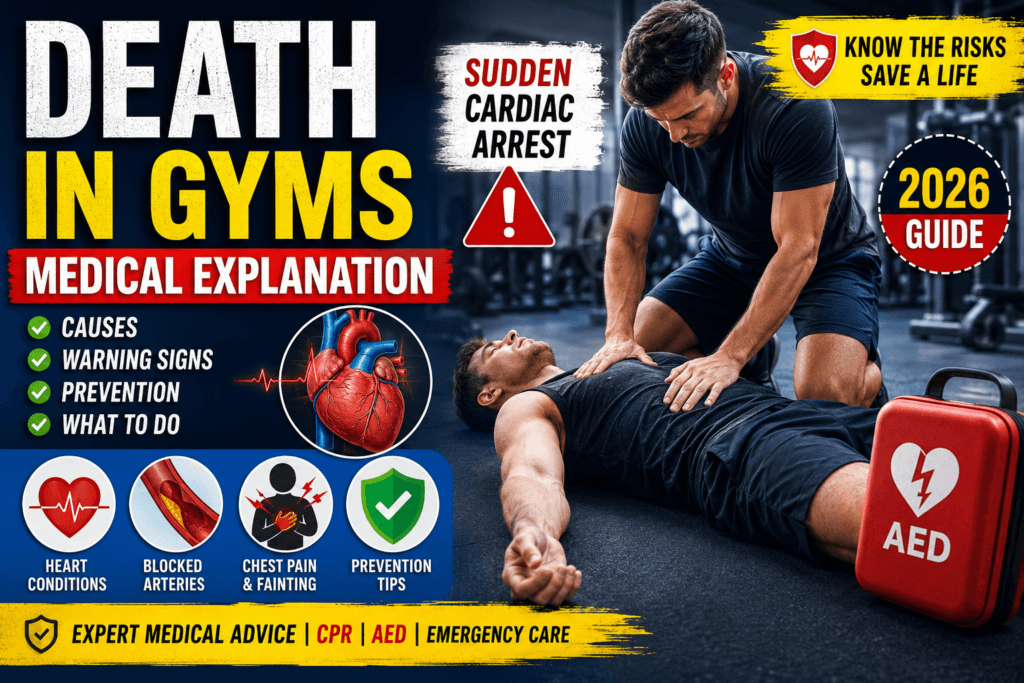
Death in Gyms refers to a sudden and unexpected death that occurs during or shortly after physical exercise. In most cases, the person collapses because the heart suddenly stops pumping blood effectively, a condition known as Sudden Cardiac Arrest (SCA).
Many people confuse sudden cardiac arrest with a heart attack. However, these conditions are not the same. A heart attack occurs when blood flow to part of the heart becomes blocked, whereas sudden cardiac arrest results from an electrical malfunction that causes the heart to stop beating effectively.
Without immediate cardiopulmonary resuscitation (CPR) and defibrillation, permanent brain damage can occur within minutes. Therefore, rapid emergency response plays a crucial role in improving survival.
Regular exercise significantly reduces the long-term risk of heart disease. Nevertheless, vigorous exercise may expose previously undiagnosed heart conditions in a small number of individuals.
How Common Is Death in Gyms?
Despite widespread media coverage, Death in Gyms remains uncommon. Millions of people exercise every day without experiencing serious complications.
Medical studies consistently show that regular physical activity lowers the overall risk of cardiovascular disease, stroke, diabetes, obesity, and premature death. However, intense exercise temporarily increases the workload of the heart. Consequently, people with hidden heart disease may develop life-threatening complications during strenuous workouts.
| Fact | Reality |
|---|---|
| Exercise causes heart disease | ❌ False |
| Exercise prevents heart disease | ✅ True |
| Undiagnosed heart disease increases risk | ✅ True |
Why Can Exercise Trigger Sudden Death?
Exercise increases heart rate, blood pressure, oxygen demand, and adrenaline release. These physiological changes are normal and beneficial in healthy individuals. However, they can become dangerous when a person has an underlying cardiovascular disorder.
For example, narrowed coronary arteries may fail to supply enough oxygen to the heart muscle during intense exercise. Likewise, inherited electrical disorders can trigger fatal arrhythmias when adrenaline levels rise rapidly.
Therefore, exercise usually acts as a trigger rather than the primary cause of sudden death.
Most victims of Death in Gyms already have an underlying medical condition. Unfortunately, many remain unaware of it until a catastrophic event occurs.
Most Common Medical Causes of Death in Gyms
1. Sudden Cardiac Arrest
Sudden cardiac arrest is the leading cause of Death in Gyms. During cardiac arrest, the heart develops an abnormal electrical rhythm such as ventricular fibrillation or pulseless ventricular tachycardia. As a result, blood circulation stops almost instantly.
Without immediate CPR and defibrillation, survival decreases by approximately 7–10% with every minute of delay.
2. Coronary Artery Disease (CAD)
In adults older than 35 years, coronary artery disease remains the most frequent cause of exercise-related sudden death.
Over time, cholesterol deposits narrow the coronary arteries. During vigorous exercise, the heart requires substantially more oxygen. If blood flow cannot meet this demand, a heart attack or fatal arrhythmia may develop.
Major Risk Factors
- Smoking
- Diabetes mellitus
- High blood pressure
- High cholesterol
- Obesity
- Family history of premature heart disease
- Sedentary lifestyle
3. Hypertrophic Cardiomyopathy (HCM)
Hypertrophic cardiomyopathy is an inherited disorder characterized by abnormal thickening of the heart muscle. It remains one of the leading causes of sudden cardiac death in young athletes.
Although many patients appear completely healthy, strenuous exercise may trigger life-threatening ventricular arrhythmias.
Young athletes who experience fainting, chest pain, or unexplained shortness of breath during exercise should undergo a complete cardiac evaluation before returning to sports.
4. Arrhythmogenic Right Ventricular Cardiomyopathy (ARVC)
ARVC is a rare genetic disease in which healthy heart muscle is gradually replaced by fatty and fibrous tissue. Consequently, the electrical signals of the heart become unstable.
Intense physical activity can provoke ventricular tachycardia, ventricular fibrillation, and sudden cardiac arrest in affected individuals.
5. Myocarditis
Myocarditis refers to inflammation of the heart muscle, most commonly caused by viral infections. Unfortunately, many individuals resume strenuous exercise too soon after recovering from influenza, COVID-19, or other viral illnesses.
Because inflamed heart muscle is electrically unstable, exercising during active myocarditis significantly increases the risk of dangerous arrhythmias and sudden cardiac death.
Never return to intense gym workouts if you still have fever, chest pain, persistent fatigue, or shortness of breath after a viral illness. Always seek medical clearance first.
6. Congenital Coronary Artery Abnormalities
Some people are born with abnormal coronary arteries that develop differently before birth. These congenital abnormalities may not cause symptoms during daily life. However, intense exercise can compress the abnormal artery, reducing blood flow to the heart muscle. As a result, the affected person may develop chest pain, dangerous arrhythmias, or sudden cardiac arrest.
Unfortunately, these conditions often remain undiagnosed until a serious event occurs. Therefore, athletes or gym enthusiasts with unexplained chest pain or fainting should undergo appropriate cardiac investigations.
7. Aortic Dissection
Although rare, an aortic dissection is one of the most catastrophic cardiovascular emergencies. It occurs when the inner layer of the aorta tears, allowing blood to separate the layers of the vessel wall.
Heavy weightlifting can cause a sudden spike in blood pressure. Consequently, individuals with uncontrolled hypertension, connective tissue disorders, or an existing aortic aneurysm face a higher risk.
A sudden tearing chest pain that radiates to the back during exercise requires immediate emergency medical attention.
8. Pulmonary Embolism
A pulmonary embolism occurs when a blood clot travels to the lungs and blocks a pulmonary artery. Although it is not directly caused by exercise, physical activity may worsen symptoms or reveal the condition.
Patients often experience sudden shortness of breath, chest pain, rapid heartbeat, dizziness, or collapse. Immediate diagnosis and treatment are essential because pulmonary embolism can be fatal.
9. Heat Stroke and Severe Dehydration
Poor hydration, high environmental temperatures, and prolonged intense exercise can overwhelm the body’s cooling mechanisms. Consequently, body temperature may rise above 40°C, leading to heat stroke.
Heat stroke damages multiple organs, including the brain, kidneys, and heart. Therefore, adequate hydration and appropriate rest breaks are essential, especially during hot weather.
Warning Signs You Should Never Ignore
Many people who experience Death in Gyms report warning symptoms days or even weeks before the event. Recognizing these symptoms early can save lives.
- Chest pain during exercise
- Shortness of breath out of proportion to activity
- Fainting or near-fainting episodes
- Palpitations or rapid irregular heartbeat
- Unexplained dizziness
- Extreme fatigue during workouts
- Loss of consciousness
- Family history of sudden cardiac death before age 50
Who Is at Higher Risk?
| Risk Factor | Risk Level |
|---|---|
| Age above 35 years | High |
| Smoking | High |
| Diabetes | High |
| High blood pressure | High |
| High cholesterol | Moderate to High |
| Family history of sudden cardiac death | High |
| Use of anabolic steroids | High |
| Energy drink abuse | Moderate |
Can Steroids and Energy Drinks Increase the Risk?
Yes. Anabolic steroids can enlarge the heart muscle, raise blood pressure, increase cholesterol abnormalities, and promote dangerous heart rhythms. Likewise, excessive intake of energy drinks may cause rapid heart rate, elevated blood pressure, dehydration, and arrhythmias, particularly when combined with intense exercise.
Therefore, avoiding performance-enhancing drugs and limiting stimulant beverages are important steps in reducing cardiovascular risk.
How Can You Prevent Death in Gyms?
Follow These Simple Safety Measures:
- Get a medical check-up before starting vigorous exercise if you are over 35 or have cardiovascular risk factors.
- Know your blood pressure, blood sugar, and cholesterol levels.
- Increase workout intensity gradually.
- Warm up before exercise and cool down afterward.
- Stay well hydrated.
- Avoid exercising when you have fever or a viral illness.
- Never ignore chest pain, fainting, or severe breathlessness.
- Choose gyms equipped with an Automated External Defibrillator (AED).
- Learn basic CPR.
What Should You Do If Someone Collapses in the Gym?
- Call emergency medical services immediately. (The American Heart Association CPR guidelines.)
- Check for responsiveness and normal breathing.
- Begin high-quality CPR without delay.
- Ask someone to bring the nearest AED.
- Follow the AED voice instructions.
- Continue CPR until trained medical personnel arrive.
Early CPR combined with rapid defibrillation offers the best chance of survival after sudden cardiac arrest.
Frequently Asked Questions
Is exercise dangerous?
No. Regular exercise remains one of the most effective ways to reduce cardiovascular disease, diabetes, obesity, and premature death. The benefits greatly outweigh the risks.
Should everyone have heart screening before joining a gym?
Not everyone. However, individuals with heart disease, cardiovascular risk factors, warning symptoms, or a family history of sudden cardiac death should undergo medical evaluation before beginning high-intensity exercise.
Can healthy young people experience Death in Gyms?
Yes, but it is uncommon. Most cases occur because of inherited heart diseases, myocarditis, or congenital abnormalities that had not been diagnosed previously.
Should I stop exercising if I develop chest pain?
Absolutely. Stop exercising immediately and seek urgent medical assessment before returning to the gym.
Key Takeaways
- Most cases of Death in Gyms result from undiagnosed heart disease.
- Sudden cardiac arrest remains the leading cause.
- Warning symptoms should never be ignored.
- Regular medical screening identifies many high-risk individuals.
- CPR and AED availability dramatically improve survival.
- Exercise remains one of the healthiest lifestyle choices when performed safely.
Conclusion
Although Death in Gyms receives significant public attention, it remains a rare event. In most situations, vigorous exercise does not create heart disease—it simply reveals an underlying medical condition that had gone unnoticed. Fortunately, awareness, proper medical evaluation, safe training practices, and rapid emergency response can prevent many of these tragic incidents.
If you experience chest pain, unexplained breathlessness, fainting, or palpitations during exercise, consult a healthcare professional before returning to the gym. Taking these precautions allows you to enjoy the tremendous health benefits of regular exercise while minimizing potential risks.