Why Smoking Is the Fastest Way to Kill Your Heart
Smoking is one of the most dangerous habits for your heart. Although many people connect smoking with lung cancer, the truth is that heart disease kills even more smokers than lung disease. Every cigarette exposes your heart and blood vessels to harmful chemicals. As a result, your risk of heart attack, stroke, heart failure, and sudden cardiac death increases significantly.
The good news is simple. Quitting smoking starts helping your heart almost immediately. Within just one day, your body begins repairing itself. Therefore, no matter how long you have smoked, stopping today can improve your heart health and increase your life expectancy.
How Smoking Damages Your Heart
Smoking affects nearly every part of your cardiovascular system. More than 7,000 chemicals are released when tobacco burns. Many of these chemicals damage blood vessels, reduce oxygen levels, and force the heart to work much harder.
| Effect of Smoking | Impact on the Heart |
|---|---|
| Nicotine | Raises heart rate and blood pressure |
| Carbon monoxide | Reduces oxygen carried by blood |
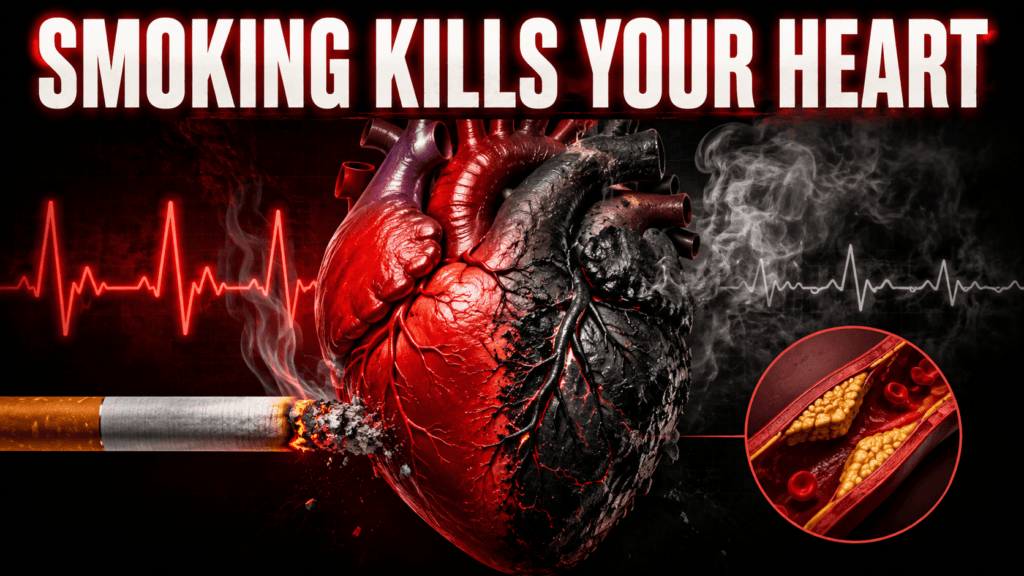
| Damaged arteries | Causes plaque buildup |
| Blood clot formation | Increases risk of heart attack and stroke |
| Inflammation | Accelerates heart disease |
1. Smoking Narrows Blood Vessels
Nicotine causes blood vessels to become narrow. Consequently, blood flow decreases while blood pressure rises. Because the heart must pump harder, it experiences additional stress every day.
2. Smoking Causes Blocked Arteries
Smoking damages the inner lining of arteries. As a result, cholesterol sticks to these damaged areas and forms plaques. Over time, arteries become narrower, leading to coronary artery disease.
Eventually, reduced blood flow can trigger chest pain (angina) or a heart attack.
3. Smoking Increases Blood Clots
Smoking makes blood stickier. Therefore, dangerous clots form more easily. If a clot blocks a coronary artery, the heart muscle suddenly loses its blood supply.
This is the main reason why smokers have a much higher risk of heart attack than non-smokers.
4. Smoking Raises Blood Pressure
Every cigarette temporarily increases blood pressure and heart rate. Although this effect lasts only a short time, repeated smoking keeps the cardiovascular system under constant stress.
Over months and years, this continuous pressure damages both the heart and blood vessels.
5. Smoking Reduces Oxygen Supply
Carbon monoxide replaces oxygen in the bloodstream. Consequently, less oxygen reaches the heart muscle. Since the heart receives less oxygen while working harder, the risk of heart damage becomes much greater.
Diseases Caused by Smoking
- Coronary artery disease
- Heart attack
- Stroke
- Peripheral artery disease
- Heart failure
- Sudden cardiac death
- Aortic aneurysm
- Atrial fibrillation
Who Is at Highest Risk?
Smoking is dangerous for everyone. However, the risk becomes even higher if you also have:
- High blood pressure
- Diabetes
- High cholesterol
- Obesity
- A family history of heart disease
- Physical inactivity
When smoking combines with these conditions, the chance of serious heart problems rises dramatically.
Is Secondhand Smoke Also Dangerous?
Yes. Even if you do not smoke, breathing secondhand smoke damages your blood vessels. Studies show that regular exposure increases the risk of heart disease and stroke.
Children, older adults, and people with existing heart disease are especially vulnerable.
Benefits of Quitting Smoking
The body begins recovering sooner than many people realize.
| Time After Quitting | Benefit |
|---|---|
| 20 minutes | Heart rate starts returning toward normal |
| 24 hours | Heart attack risk begins to decrease |
| 2–12 weeks | Blood circulation improves |
| 1 year | Risk of coronary heart disease becomes about half that of a smoker |
| 5 years | Stroke risk falls significantly |
| 10–15 years | Heart disease risk approaches that of a non-smoker |
20 minutes Heart rate starts returning toward normal24 hours Heart attack risk begins to decrease2–12 weeks Blood circulation improves1 year Risk of coronary heart disease becomes about half that of a smoker5 years Stroke risk falls significantly10–15 years Heart disease risk approaches that of a non-smoker
How to Quit Smoking Successfully
Although quitting can be difficult, many effective treatments are available.
- Set a quit date.
- Remove cigarettes from your surroundings.
- Identify smoking triggers.
- Stay physically active.
- Use nicotine replacement therapy if recommended.
- Ask your doctor about medications such as varenicline or bupropion.
- Seek support from family and friends.
- Never give up after a relapse. Keep trying.
Can Vaping Protect Your Heart?
Many people believe vaping is completely safe. However, research shows that e-cigarettes may also increase heart rate, blood pressure, inflammation, and blood vessel dysfunction. Although they may expose users to fewer harmful chemicals than traditional cigarettes, they are not risk-free.
The healthiest choice is to avoid both smoking and vaping whenever possible.
Frequently Asked Questions
Can one cigarette a day damage the heart?
Yes. Even light smoking increases the risk of heart disease and stroke.
Does quitting smoking reverse heart damage?
Many harmful effects improve after quitting. However, severe damage may not completely reverse. Therefore, quitting as early as possible provides the greatest benefit.
How quickly does the heart improve after quitting?
Heart rate and blood pressure begin improving within minutes, while circulation improves over the following weeks.
Can young smokers develop heart disease?
Yes. Smoking increases heart disease risk at every age.
Conclusion
Smoking remains one of the leading preventable causes of heart disease worldwide. Every cigarette damages blood vessels, reduces oxygen, raises blood pressure, and increases the risk of heart attack and stroke. Fortunately, quitting smoking provides immediate and long-term benefits. The earlier you stop, the healthier your heart becomes. If you smoke, today is the best day to quit and protect your future.
Read More: Heart Health Articles on MedicalsWeb
External Resources: