
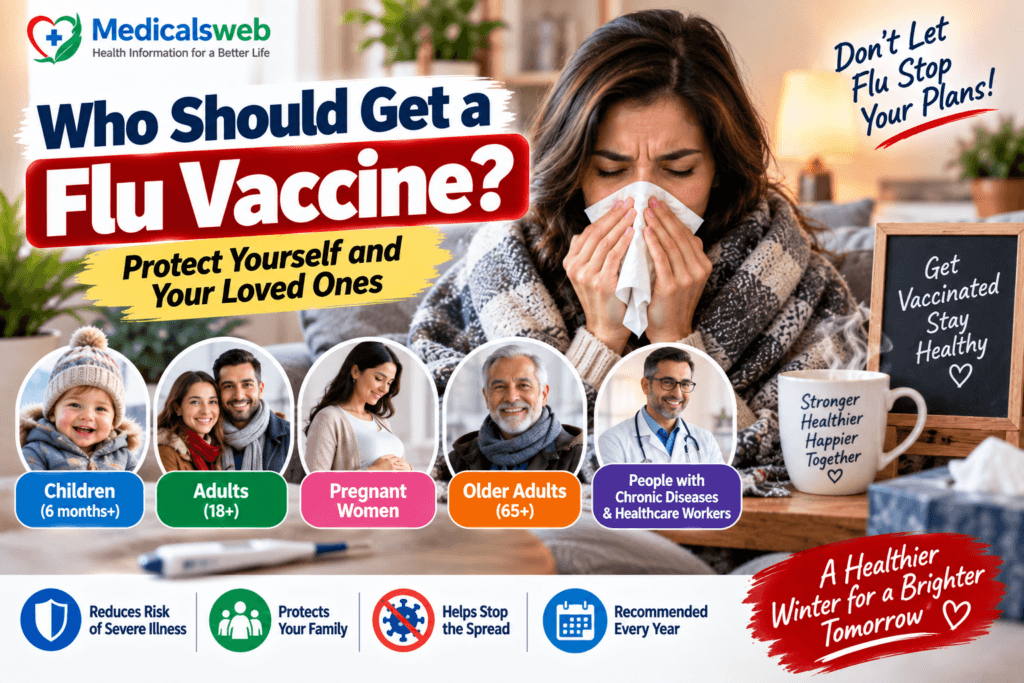
Who Should Get a Flu Vaccine? Complete Guide for Children, Adults & Pregnancy
Influenza, commonly known as the flu, is a contagious respiratory infection that can cause fever, cough, sore throat, body aches, headache, chills and severe tiredness. Although many healthy people recover without serious complications, influenza can become dangerous for certain groups.
This is why knowing who should get a flu vaccine is so important. Annual vaccination can reduce the risk of influenza and can also reduce the risk of severe illness and complications if someone becomes infected.
In this guide, we explain flu vaccine recommendations for children, adults, older people and pregnant women, along with the best time for flu vaccination, flu vaccine dosage, common flu shot side effects and important safety information.
Who Should Get a Flu Vaccine?
Current CDC guidance recommends annual influenza vaccination for everyone aged 6 months and older who does not have a contraindication to vaccination.
WHO particularly identifies several groups as priorities for seasonal influenza vaccination, including pregnant women, older adults, young children, people with chronic medical conditions and healthcare workers.
Local vaccination programs may use different priority groups depending on influenza patterns, vaccine availability and national health policies.
1. Flu Vaccine for Children
Children are among the groups that can benefit significantly from influenza vaccination. Young children can develop complications from flu, including pneumonia and dehydration, and some may require hospitalization.
The flu vaccine for children is generally available from 6 months of age, depending on the vaccine product and local recommendations.
- Children aged 6 months and older who are eligible under local recommendations
- Young children who may be at increased risk of complications
- Children with chronic lung disease or asthma
- Children with heart disease
- Children with diabetes or other chronic conditions
- Children with weakened immune systems
Children younger than 6 months are too young to receive influenza vaccination. Protecting them therefore also involves vaccinating pregnant mothers and eligible household members and caregivers.
How Many Flu Vaccine Doses Do Children Need?
One of the most common questions parents ask is about flu vaccine dosage.
Some children need two influenza vaccine doses during a season, particularly children who are being vaccinated for the first time or who do not have enough previous influenza vaccination documented.
The exact flu vaccine dosage and schedule depend on the child’s age, vaccine product and vaccination history. A doctor, nurse or vaccination provider should determine the appropriate dose.
2. Flu Vaccine for Adults
Healthy adults can also catch and spread influenza. Therefore, the flu vaccine for adults is an important part of seasonal flu prevention.
Most adults need one influenza vaccine dose each season.
- Healthy adults aged 18 and older
- Adults aged 65 years and older
- People with heart disease
- People with asthma or chronic lung disease
- People with diabetes
- People with chronic kidney or liver disease
- People with weakened immune systems
- People who live in long-term care facilities
- Healthcare workers
- Caregivers and household members of vulnerable people
Adults who have chronic medical conditions should discuss vaccination with their healthcare professional, particularly if they have previously experienced a serious reaction to a vaccine.
3. Flu Vaccine During Pregnancy
Pregnancy is an important reason to consider annual influenza vaccination.
Pregnant women are at increased risk of severe influenza complications because pregnancy causes changes in the immune system, heart and lungs.
The flu vaccine during pregnancy can help protect the mother from influenza and can also provide antibodies that help protect the baby during the first months of life.
If you are pregnant, ask your obstetrician, doctor or vaccination provider about the appropriate influenza vaccine and timing in your country.
4. Older Adults Need Special Protection
Adults aged 65 years and older are at greater risk of serious complications from influenza.
As people age, the immune system may not respond as strongly to infection or vaccination. However, vaccination can still reduce the risk of severe illness, hospitalization and complications.
Older adults should ideally receive their seasonal vaccination before influenza activity becomes widespread.
5. People With Heart Disease
People with cardiovascular disease are among the groups that can face a higher risk of serious complications from influenza.
Flu infection can place additional stress on the cardiovascular system. Fever, inflammation, dehydration and increased heart rate may be particularly concerning for people with existing heart conditions.
Vaccination is only one part of cardiovascular protection. Continue taking prescribed heart medicines and follow your doctor’s recommendations.
6. People With Diabetes and Other Chronic Diseases
Influenza can be more serious in people with chronic medical conditions.
Conditions that may increase the risk of complications include:
- Diabetes
- Asthma
- Chronic obstructive pulmonary disease (COPD)
- Heart disease
- Chronic kidney disease
- Chronic liver disease
- Neurological disorders
- Conditions that weaken the immune system
For these individuals, annual vaccination can be an important part of preventing serious influenza illness.
7. Healthcare Workers and Caregivers
Healthcare workers are frequently exposed to people with respiratory infections. Vaccination can help protect healthcare workers and reduce the possibility of transmitting influenza to vulnerable patients.
Vaccination can also be important for people who care for older adults, young children, pregnant women or people with weakened immune systems.
When to Get Flu Vaccine?
The answer depends on the influenza season where you live.
For many countries in the Northern Hemisphere, September and October are generally good times for vaccination, and CDC guidance recommends that people ideally be vaccinated by the end of October.
However, the best time for flu vaccination can vary by country and local influenza activity.
- Ideally before the main influenza season begins.
- In many Northern Hemisphere countries, September and October are good months.
- Children who need two doses may need to start earlier so the second dose can be given at least four weeks later.
- If you miss the ideal timing, vaccination later can still be useful while influenza viruses are circulating.
It generally takes about two weeks after vaccination for protective antibodies to develop.
What About Flu Vaccine in Winter?
People sometimes believe that getting a flu vaccine in winter is pointless because flu season has already started.
That is not necessarily true.
If influenza viruses are still circulating and you have not yet been vaccinated, vaccination can still provide protection. The best timing depends on local influenza activity and your individual circumstances.
What Is the Flu Vaccine Dosage?
The term flu vaccine dosage can refer to both the amount given in one vaccination and the number of doses needed.
The volume of an influenza vaccine dose varies according to the vaccine product, formulation and age group. Therefore, people should not calculate vaccine volumes themselves.
The vaccination provider should administer the correct age-appropriate vaccine and dose according to the product instructions and local recommendations.
What Are the Flu Shot Side Effects?
Most flu shot side effects are mild and temporary.
- Pain or tenderness at the injection site
- Redness or mild swelling
- Headache
- Muscle aches
- Tiredness
- Low-grade fever
These reactions usually resolve on their own.
Can the Flu Vaccine Cause Flu?
No. Injectable influenza vaccines do not cause influenza.
Some people may feel mildly tired or develop a sore arm or low-grade fever after vaccination. These effects are different from having influenza.
It is also possible to catch another respiratory virus after vaccination because the flu vaccine does not protect against every virus that causes coughs, colds or flu-like symptoms.
Who Should Not Get a Flu Vaccine?
Most people aged 6 months and older can receive an influenza vaccine, but there are important exceptions and precautions.
- You have previously experienced a severe allergic reaction to an influenza vaccine.
- You have a serious allergy to an ingredient in a particular vaccine.
- You have previously developed Guillain-Barré syndrome and need individualized advice.
- You are currently moderately or severely ill.
- You are unsure which influenza vaccine is appropriate for your age or medical condition.
Children younger than 6 months are too young to receive influenza vaccination.
People with previous serious vaccine reactions should not simply avoid vaccination permanently without medical advice. A healthcare professional can review the previous reaction and determine whether another vaccine formulation may be appropriate.
Does Egg Allergy Prevent Flu Vaccination?
No. Egg allergy is not considered an automatic reason to avoid influenza vaccination.
Current CDC guidance states that people with egg allergy can receive an influenza vaccine appropriate for their age and health status.
Why Is a Flu Vaccine Needed Every Year?
Annual vaccination is recommended because influenza viruses continually change and immunity from vaccination decreases over time.
For the 2026–2027 Northern Hemisphere season, for example, the influenza vaccine composition was updated to better match viruses expected to circulate.
This is why last year’s flu vaccination should not be considered a substitute for the current season’s vaccination.
Flu Vaccine Recommendations Around the World
WHO identifies pregnant women, older adults, people with chronic medical conditions and healthcare workers as priority groups for seasonal influenza vaccination. Many national programs also include young children and recommend vaccination more broadly.
CDC guidance in the United States recommends annual influenza vaccination for everyone aged 6 months and older who does not have a contraindication.
Because influenza seasons differ between regions, the best time for flu vaccination also varies. People living in countries with different seasonal patterns should follow local public-health guidance.
Frequently Asked Questions
Who should get flu vaccine every year?
Most people aged 6 months and older should receive an influenza vaccine every year unless they have a contraindication. Vaccination is particularly important for pregnant women, young children, older adults, people with chronic conditions and healthcare workers.
When to get flu vaccine?
In many Northern Hemisphere countries, September and October are generally good months for vaccination. However, timing varies by country and influenza season. If you miss the ideal period, vaccination may still be useful while influenza is circulating.
Is flu vaccine safe during pregnancy?
Yes. Influenza vaccination is recommended for pregnant women by WHO, and an appropriate injectable influenza vaccine can be given during pregnancy. The live nasal-spray influenza vaccine is not recommended during pregnancy.
How many flu vaccine doses does a child need?
Some children aged 6 months through 8 years need two doses at least four weeks apart, depending on their previous influenza vaccination history. Other children need one dose for the season.
What are the common flu shot side effects?
The most common side effects include soreness or redness at the injection site, tiredness, headache, muscle aches and sometimes a low-grade fever. Serious reactions are rare.
Can I get a flu vaccine in winter?
Yes. If influenza is still circulating and you have not been vaccinated, getting vaccinated during winter may still provide protection. Speak with your healthcare provider about local influenza activity.
Can people with heart disease get a flu vaccine?
Yes. People with heart disease are among the groups that particularly benefit from influenza vaccination because flu can cause serious complications in people with cardiovascular conditions.
Does the flu vaccine cause flu?
No. Injectable influenza vaccines cannot give you influenza. Mild temporary reactions after vaccination are possible, but they are not the same as having the flu.
Final Thoughts
The flu vaccine is an important tool for protecting individuals and communities from seasonal influenza. Although anyone can become infected, certain people face a greater risk of severe disease and complications.
Young children, older adults, pregnant women, people with chronic medical conditions and healthcare workers are particularly important groups for influenza vaccination. In many countries, annual vaccination is also recommended more broadly for everyone who is eligible.
The best time for flu vaccination depends on where you live. In many Northern Hemisphere countries, September and October are ideal months, but vaccination later in the season can still be useful.
If you are eligible for a flu vaccine, don’t wait until influenza is already spreading widely. Talk to your doctor, pharmacist or vaccination provider about the appropriate vaccine, flu vaccine dosage and timing for you and your family.
Medical Disclaimer
This article is for general educational purposes only and does not replace professional medical advice, diagnosis or treatment. Vaccine recommendations, formulations, dosage and timing can vary according to age, medical history, country and vaccine availability. Always consult a qualified healthcare professional or local immunization program for individualized advice.
Trusted Medical Resources
- CDC – Who Needs a Flu Vaccine
- CDC – Clinical Guidance for Influenza Vaccination
- WHO – Influenza Vaccine Use
- WHO – Seasonal Influenza