
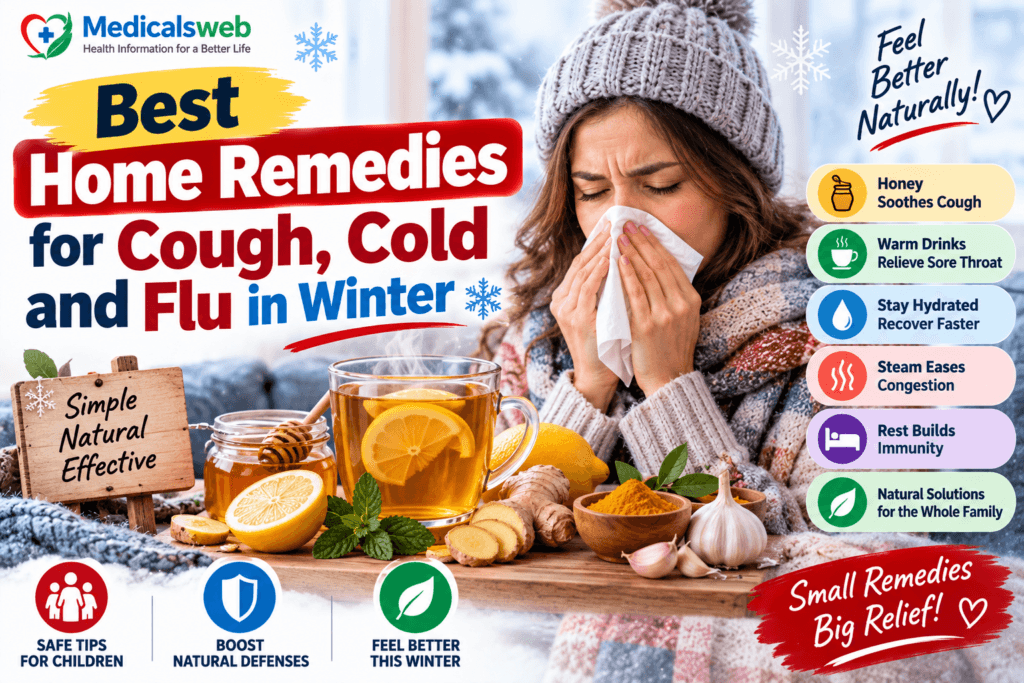
Best Home Remedies for Cough, Cold and Flu in Winter
Winter often brings more cough, cold and flu-like illnesses. Children may develop runny noses and coughs, while adults may experience sore throat, congestion, fever, body aches and tiredness.
The good news is that many mild respiratory infections can be managed at home with rest, fluids and simple measures that make symptoms more comfortable.
However, home remedies are mainly for symptom relief. They do not eliminate viruses such as influenza or the viruses that cause the common cold. Some people, particularly those at higher risk of complications from flu or other respiratory infections, may need medical assessment and specific treatment.
What Are the Best Home Remedies for Cough, Cold and Flu?
Several simple measures can help relieve common respiratory symptoms. The most useful home remedies include:
- Drinking plenty of fluids
- Honey for cough in people over 1 year of age
- Warm drinks for a sore throat
- Rest and adequate sleep
- Saline nasal drops or spray
- Using a clean humidifier or cool-mist vaporizer
- Warm salt-water gargles for adults
- Keeping the head slightly elevated while sleeping
- Avoiding cigarette smoke and other airway irritants
Let’s look at each option in more detail.
1. Honey for Cough
Honey is one of the most popular natural home remedies for cough, particularly when the throat feels irritated.
A small amount of honey may soothe the throat and reduce coughing, especially at night. It can be taken on its own or mixed into a warm drink.
Honey does not cure the viral infection itself, but it may make coughing more manageable.
2. Drink Plenty of Fluids
Good hydration is one of the simplest and most useful home remedies when you have a cold or flu.
Fever, sweating, reduced appetite and breathing through the mouth can all contribute to fluid loss. Drinking enough fluids helps prevent dehydration and can make mucus easier to clear.
- Water
- Warm water
- Soups and broths
- Herbal or caffeine-free drinks
- Other suitable fluids that you normally tolerate
You do not need to force excessive amounts of fluid. Drink regularly according to your thirst and medical needs.
People with certain heart or kidney conditions may have specific fluid restrictions, so they should follow their doctor’s advice rather than deliberately increasing fluid intake.
3. Try Warm Lemon and Honey
A warm drink containing lemon and honey can be soothing when you have a sore throat or irritating cough.
- Squeeze about half a lemon into a mug.
- Add warm water.
- Add 1–2 teaspoons of honey.
- Allow it to cool to a comfortable temperature before drinking.
The benefit comes mainly from soothing the throat and providing fluids. It is not a cure for influenza or the common cold.
Never give very hot drinks to small children. Also remember that honey is not suitable for babies under 12 months.
4. Rest and Get Enough Sleep
Your body needs energy to recover from an infection. Therefore, getting adequate rest is an important part of managing a cold or flu.
Do not feel that you have to continue your normal workload when you are exhausted or feverish.
5. Use Saline Nasal Drops or Spray
A blocked or runny nose can make sleeping and breathing uncomfortable. Saline nasal drops or sprays can help moisturize the nasal passages and loosen mucus.
Saline is particularly useful for children because it does not contain a decongestant medication.
6. Use a Clean Humidifier
Dry indoor air can irritate the nose and throat and may make a cough feel worse.
A clean humidifier or cool-mist vaporizer can add moisture to the air and may make breathing more comfortable.
Avoid making the room excessively humid. Comfortable, clean air is the goal.
7. Warm Steam for a Blocked Nose
Warm, moist air can temporarily make a blocked nose feel more comfortable.
You can sit in a bathroom while a warm shower is running or breathe comfortably in a steamy environment.
8. Gargle With Warm Salt Water
If a cold or flu causes a sore throat, warm salt-water gargling may provide temporary relief.
- Add about half a teaspoon of salt to a glass of warm water.
- Gargle for several seconds.
- Spit it out rather than swallowing it.
This method is more appropriate for older children and adults who can gargle safely. Young children should not be encouraged to gargle if they may swallow the solution or choke.
9. Sleep With Your Head Slightly Elevated
If coughing or nasal congestion becomes worse when lying flat, raising your head slightly while sleeping may make breathing more comfortable.
For adults, an extra pillow can sometimes help. However, babies should always be placed on their backs on a firm, flat sleep surface rather than being propped up with pillows.
10. Avoid Cigarette Smoke
Smoking can irritate the airways and make coughing worse. Secondhand smoke can also be harmful, particularly for children.
When someone has a respiratory infection, keeping the home completely smoke-free is especially important.
11. Eat Light, Nutritious Foods
You may not feel very hungry when you have the flu or a cold. Nevertheless, try to eat nutritious foods when you can.
- Warm soups
- Vegetable soup
- Fresh fruits
- Cooked vegetables
- Eggs
- Yogurt if tolerated
- Whole grains
- Light, balanced meals
You do not need expensive supplements or special “detox” drinks to recover from an ordinary cold.
12. Keep the Air Clean
Respiratory viruses can spread through the air. Improving ventilation can reduce the concentration of infectious particles indoors.
Open windows when weather and safety conditions allow, use appropriate air filtration if available, and avoid crowded poorly ventilated spaces while sick.
Home Remedies for Children: What Parents Should Know
Children need special consideration because some common adult remedies and medicines are not safe for young children.
- Never give honey to a child younger than 12 months.
- Do not give very hot drinks to children.
- Avoid steam inhalation from bowls of hot water because of burn risk.
- Do not give aspirin to children unless specifically advised by a healthcare professional.
- Over-the-counter cough and cold medicines are not recommended for young children unless a healthcare professional advises their use.
- Always check the correct dose of any medicine according to the child’s age and weight and follow professional advice.
For young children, simple measures such as saline nasal drops, adequate fluids, rest and a clean cool-mist humidifier may be more appropriate than multiple medicines.
What About Ginger, Turmeric and Other Natural Remedies?
Ginger, turmeric, garlic and other traditional ingredients are commonly used during colds and flu. Some people find warm herbal drinks comforting, but evidence for many herbal remedies is limited or mixed.
Natural does not automatically mean safe. Some herbs and supplements can interact with medicines or may not be appropriate during pregnancy, breastfeeding, childhood or certain medical conditions.
Do Home Remedies Cure the Flu?
No. Home remedies can help relieve symptoms, but they do not directly eliminate the influenza virus.
Most otherwise healthy people with mild flu recover with supportive care. However, some people are at higher risk of serious complications and may benefit from antiviral treatment.
Antiviral medicines work best when started early, so people at higher risk should contact a healthcare professional promptly if flu symptoms develop.
Do Antibiotics Help With Colds and Flu?
Usually, no.
Colds and influenza are caused by viruses, while antibiotics treat bacterial infections. Taking antibiotics unnecessarily will not cure a viral cold or flu and can cause side effects and contribute to antibiotic resistance.
When Should You See a Doctor?
Most mild respiratory infections can be managed at home. However, some symptoms should not be ignored.
- Difficulty breathing or shortness of breath
- Persistent chest pain or pressure
- Coughing up blood
- Severe weakness or confusion
- Signs of significant dehydration
- A fever or cough that improves and then returns or becomes worse
- Symptoms that are severe or rapidly worsening
- A cough that persists longer than expected
Children may show different warning signs. Fast or difficult breathing, bluish lips or face, dehydration, unusual sleepiness, seizures, or worsening symptoms require urgent medical evaluation.
How Long Does a Cold or Flu Usually Last?
Recovery varies depending on the infection and the person.
Common cold symptoms often improve within about one to two weeks, although a cough can sometimes last longer. Flu symptoms often begin more suddenly, and many people recover within several days to less than two weeks, although fatigue and cough can persist longer in some people.
If symptoms are not improving, become worse, or return after initially getting better, medical advice may be necessary.
How to Prevent Cough, Cold and Flu This Winter
Prevention is better than spending several days sick at home. Along with these home remedies, healthy habits can reduce the spread of respiratory infections.
- Wash your hands regularly.
- Cover coughs and sneezes.
- Improve indoor ventilation.
- Avoid close contact with people who are sick when possible.
- Stay home when you are sick and avoid spreading infection to others.
- Keep recommended vaccinations up to date.
- Avoid smoking and secondhand smoke.
- Get adequate sleep and maintain a balanced diet.
For more information, read our article on Why Cough, Cold and Flu Become More Common in Winter.
Frequently Asked Questions
What is the best home remedy for cough?
Honey can help soothe a cough in adults and children over 1 year of age. Warm fluids, adequate hydration, humidified air and avoiding smoke can also help. The best approach depends on the cause of the cough.
Is honey good for cough and cold?
Honey may soothe a cough and irritated throat, particularly at night. It can be used in adults and children over 1 year old, but it must not be given to babies younger than 12 months.
Can I use steam for a blocked nose?
Warm moist air may temporarily relieve nasal congestion. However, avoid bowls of boiling water, especially around children, because of the risk of serious burns. A warm shower or steamy bathroom is safer.
What should children drink during a cold or flu?
Offer appropriate fluids regularly. Water, milk, soups and other age-appropriate drinks can help prevent dehydration. Babies should continue their normal breast milk or formula feeding unless a healthcare professional advises otherwise.
Can ginger or turmeric cure flu?
There is not enough evidence to say that ginger, turmeric or other traditional remedies cure influenza. They may be used as part of a normal diet if appropriate, but they should not replace medical treatment when treatment is needed.
When should a cough be checked by a doctor?
A cough should be medically assessed if it is severe, persistent, worsening, associated with breathing difficulty or chest pain, accompanied by coughing up blood, or occurring with other concerning symptoms.
Final Thoughts
Simple home remedies can make a winter cough, cold or mild flu more comfortable. Rest, fluids, honey for people over 1 year of age, warm drinks, saline nasal drops, humidified air and avoiding smoke are practical options for symptom relief.
However, home treatment should not become a reason to ignore serious symptoms. Flu and other respiratory infections can occasionally cause complications, particularly in young children, older adults, pregnant women and people with chronic medical conditions.
Use simple, safe home remedies to relieve symptoms, stay hydrated, get plenty of rest and avoid spreading infection. But if breathing becomes difficult, chest pain develops, symptoms suddenly worsen, or you are in a high-risk group, contact a healthcare professional promptly.
Medical Disclaimer
This article is for general educational purposes only and does not replace professional medical advice, diagnosis or treatment. Children, pregnant women, older adults and people with chronic medical conditions may need individualized medical advice. Seek urgent medical care for severe breathing difficulty, persistent chest pain or pressure, confusion, severe weakness, dehydration or other serious symptoms.
Trusted Medical Resources